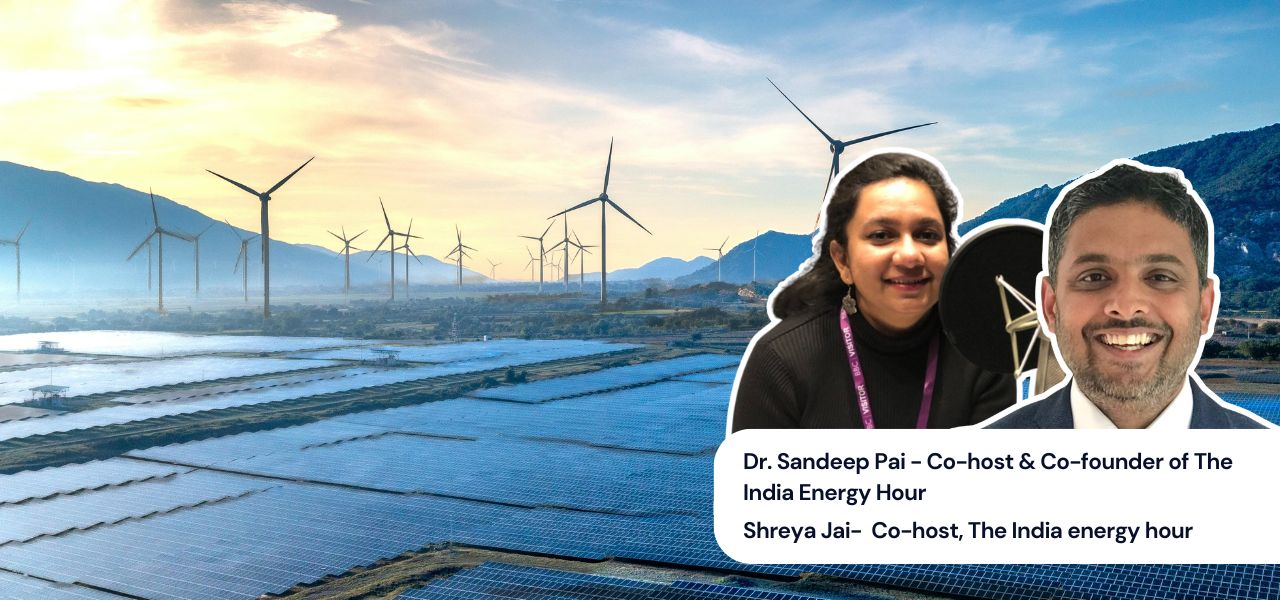

As The India Energy Hour completes five years, the hosts come together for a special recap episode reflecting on how the podcast began and how it has evolved alongside India’s energy transition. From the early motivation behind starting the show to the moments that shaped its direction, this episode revisits key milestones from the last five years.
The hosts discuss some of the most impactful episodes and conversations, memorable guests, and how listener engagement has influenced the podcast’s journey. The episode also looks ahead to what listeners can expect in the coming year—from new themes to deeper dives into India’s evolving energy and climate trends.
Listen to the episode with full transcript here in English
[Podcast intro]
Welcome to the season five of the India Energy Hour podcast. This podcast explores the most pressing hurdles and promising opportunities of India energy transition through an in depth discussion on policies, financial markets, social movements and science. Your hosts for this episode are Shreya Jai, Delhi based energy and climate journalist and Dr. Sandeep Pai, energy transition researcher and author. The show is produced by 101 reporters, a pan India network of grassroots reporters that produces original stories from rural India. If you like our podcast, please rate us on Spotify, Apple Podcasts or the platform where you listen to our podcast. Your support will help us reach a larger audience.
[Podcast interview]
Shreya Jai: Hello and welcome to the India Energy Hour podcast. We are your two hosts joining in this very special episode. This is an episode of recap and of tribute and also of looking ahead. The India Energy Hour is completing its fifth season, which is all thanks to our listeners. And we thought that it would be a good time to look back at the journey of India Energy Hour, which was started during the troubled times of the COVID pandemic. And every year it has become bigger and better. And, you know, the next season before we launch it, I and Sandeep wanted to come together, talk about what you can look forward to. So thank you for joining in this very special recording and episode. How are you feeling, Sandeep?
Sandeep Pai: It’s honestly been such a remarkable journey. I remember we were having a conversation, you know, a few years ago and during the, and I remember very clearly that it was during COVID and we wanted, we identified sort of a gap that, you know, there is no one kind of, there are so many podcasts around the world in, especially in OECD and Western countries. Like there is so much nuance. There’s so much discussion. I mean, I, in the U S there’s like hundreds of energy podcasts, but at that time, at least we, when we were doing a landscape assessment, we could not find even a single podcast that, you know, week on week or month on month focuses on nuances of India’s energy and climate issues. And, we somehow, you know, our brains crossed wires and we decided that let’s just do it. And we, neither of us, know anything about podcasts, nor we have a history of podcasting. Of course, we both have journalism backgrounds, but, and we know storytelling, but we don’t have backgrounds. Unless Shreya, you’ve done some special degree, which are worked on the side. I don’t know. But as far as I know, we don’t have a background in podcasting. So it was just a remarkable start. We have had so much uptick. People love the nuances that we have covered. And, you know, like I personally have grown a lot just because of the podcast, because even when you work on energy issues, you only work on, you know, a subset of energy issues. No one can claim that they work on every single energy issue, whether it’s about RE or storage or coal or power. I mean, everybody has a subset that they work on. And, at least for me, I have learned so much through this podcast, just understanding the whole landscape of, and gamut of energy issues and perspectives. And so, yeah, it’s, it’s been an amazing five years, you know, and five seasons and we want to do maybe 10, 15, 20 more seasons. So very, very excited to take it to the next level. Yeah. Do you learn, did you learn something from this podcast? How has your own journey been?
Shreya Jai: Yes. I, you know, every episode has been a learning experience. And I have to thank all the guests, you know, from our first guest who came in on this particular podcast, who was kind enough. You know, our first five guests who trusted in us and joined in this podcast. And it was such a nice learning experience, which started from then. And since then, it has just been a knowledge explosion for me. I sit in a recording and I don’t have a dull moment at all because, you know, something new I hear, which opens up a new neuron in my brain, probably. So that is what the experience has been in this podcast. And you’re right, you know, not only we identified a lack in this discussion of India’s transition, energy transition, which was not being discussed about. Yes, we are storytellers, but how much can me and you yap? So I think we I’m very thankful to all these guests. And it has been such a heterogeneous mix. We had, you know, researchers, we had bureaucrats, we had, you know, senior corporate leaders, everyone giving their own perspective, their own story. And I think at the end of the day, this podcast was just telling the story of the sector through these very important characters, who themselves had such great stories, you know. So in some of these episodes, we had our intro section running 30 to 40 minutes, because we were fascinated with the journey that some of our people took and how it mirrored the journey of the sector. So I’m very happy and very thankful for that fateful call five years back, which led to the creation of this podcast. And I have to mention, you know, this particular character in this podcast story remains in the background. But a huge shout out to 101 reporters and our mutual friend, Mr. Gangadhar Patil, to, you know, give us that confidence and that initial backing, which led to the creation of this podcast. But these five years have been a dream. And it actually surprises me that we have achieved so much. You know, it has been applauded so much. We are into some great listings, which amazes me. But yes, it doesn’t shock me. I think I trusted that we’ll come out with a good product. So that’s what we did.
Sandeep Pai: Yeah, honestly, Shreya, I think one of the highlights of this whole podcast is how people have come to work in the energy sector. Like the first 10 to 20 minutes we spent on the person, like almost every person, if not every other person, basically joined the energy sector, the climate sector, whether they’re in business, whether they’re in government or academia, by happenstance. Most of the people were doing something else. They had a completely different background. They got into a project or they somehow got into an opening and then their whole trajectory. And that actually speaks to the very interdisciplinary nature of energy and climate. And it’s so rewarding. And I think we have had so many students who say like, wow, you know, people have taken all kinds of different journeys to even, you know, get to where they are. They have not when they were in their high school or standard 12, they had not planned that. Oh, I will work in the energy space. Some people were working, studying history. Others were studying engineering and, you know, others. And then it’s just so fascinating how people’s journeys have been. And I think that has been very rewarding. Let me ask you one question just as a reflection. What were some of your like favorite episodes or series that you really liked? I mean, all these episodes I learn a lot, but, you know, always have something favorite. So what were the series of episodes that you really liked?
Shreya Jai: Um, my first three episodes of this podcast would always be my favorite. And shout out to Vinay Rastogi, Rohit Chandra and Swati D’Souza, who are our first three guests, who trusted us long before we thought that this podcast will become so big. So those top, those are my top three. My first three episodes, our first three episodes would always be my top three. A big thank you to them if they’re still listening to this podcast, I hope they are. Some of my favorite guests, you know, have been across the aisle. I love the episode we recorded with Vijayaram Chandran, again, in season one. It was such a nice episode. And, you know, I found such an amazing person. You introduced her to this podcast. She, again, was a listener to this podcast. And it was so fun to have her. You remember we did two episodes. One we recorded with fellow journalist Anupam Chatterjee in season one. And then season two, we had Sarita, me. And we were talking about this whole cold crisis. And we had this, you know, Sarita had the fascinating stories about how journalism world functions. I think those were some of my favorite episodes during the initial years. In the later years, I’ll say more recently, my favorite series has been the transmission series. We had the grid man himself, Mr. Suni. And my, you know, very old friend Vishal Pandya, who was part of the series. And people have actually messaged me to tell what an education these two episodes were. Because they didn’t know that the grid can be such an exciting topic. How these two gentlemen made it to be. So that is definitely, you know, some of the favorites. And obviously, you know it. Personally, I love when we have women on the episodes. So I’ll take some quick names. Sarita, obviously. Then we had Bharti Chaturvedi. We had Aarti Khosla. We had Chami Singh, who was just amazing. Then Ulka Kelkar. You know, and some of my favorites. Ulka’s episode is great. Jaya Dhindaw’s episode. I still cite that episode to anyone who wants to write on climate and urban crisis. Again, a must-listen episode. So, you know, I can keep on listing Sandeep. So I would want to know from you which are your favorite episodes. So please do tell.
Sandeep Pai: Yeah. I mean, I think you have covered a lot. But honestly, just to name Rob, it’s very hard. I mean, I know I started this question. But it’s hard to list, like, you know, your absolute favorites. Because every single episode, I have walked out with five new things that I have learned. But some of my favorites, you know, I like all the discussions we have had on, you know, climate finance. Recently, I did one with Neha Kumar. That was, like, absolutely, I think that is 101 of climate finance for anybody. We did one with Vikas Mehta of SED Fund, who really gave us a big picture understanding of the landscape of climate finance. And, you know, there were so many others who touched upon different aspects of climate finance and stuff like that. And I think, you know, all those conversations were really great. We did some episodes on Just Transition, which, you know, I really liked. And, in fact, there was one episode that sort of, you know, we did with Anil Jain, Dr. Anil Jain, which was more than just Just Transition. That was about, like, the future of Coal and Just Transition, which, I mean, Dr. Anil Jain is always, like, an amazing sort of person. And it was a remarkable episode to just learn from. Very recently, in Season 5, we did a series on state-owned enterprises and the future of state-owned enterprises in the energy transition. And all those three episodes, one on ONGC, one on Coal India, and one general. That series, I think, it should be a go-to series for anybody who wants to understand how does a state-owned enterprise work, you know, how much autonomy they have, what can they do, what can’t they do, you know, how are they thinking about all these fossil fuel state-owned enterprises, how are they thinking about their future, you know, in a net-zero India. And I think those episodes were absolutely sort of spot-on and incredible. And I really liked it a lot. I also really liked an episode with Seaver, my friend Seaver Wang, who works at the Breakthrough Institute. You know, he was a long-term follower of our podcast. He used to write Twitter threads of our podcast. And he’s a really deep thinker and scholar on many topics, including critical minerals. So, you know, really, it was so much fun to have him on the podcast and talk about his paper on critical minerals. So, fascinating, you know, stuff. And, you know, I think I would like, sometimes when in my free time, I go back and listen to some of the episodes because they’re just go-to episodes and it’s just remarkable. And I think it’ll be exciting to cover more of these types of stories and episodes going into the future. But, yeah, I want to, you know, give a shout out to our listeners here. And we will keep doing that throughout this, you know, fun short episode that we both are recording. Honestly, a lot of suggestions have come from the listeners. We get LinkedIn DMs, we get Twitter DMs, we get Twitter threads saying, could you cover this? We would really like to understand that. Sometimes they also suggest guests. Sometimes they bring in, like, you know, different people and partnerships and so on. So, it’s just been unbelievable. And I’m very excited and proud about that. Yeah. So, Shreya, I think, you know, it’s great to reflect on these things, but I think I want to understand from you, what are some of the key trends in the energy sector, whether you learned from the podcast or, you know, you are a deep thinker and observer in the India climate and energy space. So, what were some key trends that you learned this year or our listeners should look forward to? And something that we’ll also cover in 2026. So, go for it.
Shreya Jai: Yeah. You know, I would repeat myself, but I think everyone should give a listen to our grid episode. Because I think grid transmission and distribution is finally coming to the center stage of India’s electricity planning. And better late than never. But, you know, it comes at a very opportune time. You know, it is time that this country starts, you know, thinking from the angle of not just adding capacity, but actually connecting it as well. We have had, you know, success stories in household electrification in terms of renewable capacity addition, etc. But over the last two years, we have seen what happens when a supporting infrastructure is missing or the grid is not well prepared. So, definitely, that is one of the top things. And, you know, the episodes around that, three to be precise, our grid series and also the episode that we recorded, Pratik Agarwal of Rasonia, who talked about investment in the transmission space and also power equipment. That, you know, helped me build an understanding that how important it is to, you know, think beyond just gigawatts and think about, you know, in terms of infrastructure, in terms of power as not just a commodity, but a market in itself. So, I think, and that would be one big thing going forward, because as you’re seeing in India as well, the policymakers are also thinking from that angle. There’s so much of talk, so much of, you know, investment planning that is happening to boost transmission infrastructure. One addition to that, you know, one parallel that is also happening is the electricity bill. The amendments to it might be tabled in the next parliament session next year. And, you know, that has some sweeping changes for the India’s power distribution sector. We have had so many episodes, the most recent being with former power secretary Alok Kumar, who explained, you know, not just what is wrong, but why did the problem become so big and what went wrong and what needs to, you know, improve. And he did, in a way, touch upon that kind of economic modeling that needs to come in the distribution sector. So, I think it is high time that we see some sort of economic modeling come in, you know, not just privatization, but, you know, Discom’s fixing their own backyard in whatever way. And the electricity bill paves way for that. I’m really waiting for it to come in. And I think we all have been waiting for that bill to come in for a long time. So, that is one thing that I’m looking forward to for sure. And one thing that we have not touched upon, and it is on my 2026 agenda. So, look out listeners, because that will be one topic that we’ll be discussing, is nuclear. You know, the cabinet approved the amended Nuclear Act this last week. And I think this week, the lower house of the parliament also approved it. So, big things are being planned in nuclear. The prime minister also in his speech multiple times has mentioned about a 100 gigawatt target in nuclear. Some of the big companies are jumping on it. NTBC has a plan. They even have mentioned nuclear plans in their investor presentations. Some other private companies also, Tata, you know, Jindal. Everyone is just talking about nuclear. So, I think we’ll also keep an eye out. We might get a good nuclear expert to talk about what is happening where. Also, we are seeing the interest of other nations. When, you know, Russian President Putin was here, he also talked about partnership on the nuclear front. The U.S. we are hearing is very interested to invest in India’s nuclear sector. So, we will see how that pans out. So, I think nuclear is one thing that I’m keeping my eye out on for sure. Yes.
And on that note, you know, we are talking about the global interest in India’s different, you know, supply chain, energy supply chain. I would like to ask from you, you know, you’re sitting there, you know, taking a bird’s eye view. If I like, I usually like to tell you that, you know, you have both the outside view and inside view of the sector. And so, which are the segments that, you know, excited you this year? And what are the segments going forward which will excite you? You know, you have worked closely in the coal mining space and planning just transition in this very, very important sector. So, you know, tell us more about it. I, again, this would be this learning moment. So, I would want the listeners also to tune in because no one can talk about just transition in coal like you can.
Sandeep Pai: That’s too much. But, okay. So, I think, you know, let me just kind of give you a few things that has kept me quite exciting. So, first on the renewable side, I just want to touch upon how exciting it is that India has achieved its target of 500 gigawatts, you know. And there is so much momentum going into, you know, future targets. And I think that’s absolutely exciting. And especially now, it’s not just standalone renewables, but renewables plus storage. The story of moving beyond just like installing solar and rain as isolated systems into integrating it with BSCS. I was looking at the Morena, you know, the solar plus storage, which for the first time, you know, the price is under three rupees, sub three rupees. And that is so exciting to see that solar plus storage or renewables plus storage is increasingly becoming, I won’t say reality, but it’s knocking on the doors of reality. That it could really take off in 2026 and going forward. And I think we need to focus, even in our podcast, to track this trend very closely in terms of how the solar plus storage story is absolutely sort of, you know, taking shape. On the coal side, one of the most exciting things that for me personally and professionally that has happened is the new mining guidelines that came out in March 2025. So before this, you know, India had mine closure policies in the coal mining sector and all other policies previous to this focused on just when you close a mine, plant trees and restore the landscape ecologically. But for the first time in 2025, the government has a complete section on how to focus on just transition, which goes beyond just planting trees. And, you know, it focuses on workers, communities. It focuses on topics like repurposing into solar topics like repurposing into, you know, eco parks and so on and so forth. So it’s a remarkable shift of, you know, thinking about mine closure from the point of view of just planting trees and ecological restoration to the one that is absolutely focused on people and communities and regions. And why this is significant is the government of India, Ministry of Coal & Coal controller and Coal India and companies like Coal India have identified 150 mines to be closed in the next five years. The scale is huge. Those 150 mines combined and the impact that will have on communities is larger than the entire coal transition of Europe, South Africa combined. So even what is going to transpire in India in the next five years, the scale is so huge. So this new policy sets the right direction to do the right thing. Of course, implementation is another story. And I think we will continue to track how the implementation of this evolves and grows and so on and so forth. But, you know, absolutely, this is a key trend. And I think something that we are tracking very closely. And it’s a big story. It’s a story that has not been said enough, but it’s a really big story that has huge implications for at least five to seven states in central and eastern India. So that has kept me very exciting. And I’ll just quickly touch upon, you know, critical minerals, because that’s also a sector I’ve been tracking. I mean, there is a lot of momentum on critical minerals globally. You know, every country wants to, you know, secure critical minerals, whether they produce domestically, but they want to, you know, buy assets. They want to secure those critical minerals, which are essential ingredients for energy transition and solar, wind, EVs. And to that, an Indian government launched the National Critical Mineral Mission and put about 35,000 crores, which is roughly, you know, about $40 billion to provide funding for domestic exploration and reducing import dependence. It is strengthening, you know, the geological survey of India to do more exploration work, etc. And critical minerals has now become a top priority for the government. So what Indian government is doing, in very brief, is trying to extract more minerals domestically and process. It’s trying to buy, it has unleashed the power of state-owned PSUs, or at least it is trying to unleash, let’s not celebrate yet, because things are only starting to happen. And there’s a lot of competition with China and other countries, but it is trying to unleash the cash-rich state-owned enterprises to go and buy assets overseas. But at the same time, it’s also investing in innovative technologies like coal waste to critical minerals, you know, ash waste to critical minerals and all that. So at a policy level, this is very exciting. Of course, again, I will come back to the fact that implementation is another question. There are bottlenecks, there are issues, but this is something we need to track next year. And at least, you know, once in a while, tell the story of how this is unfolding. And yeah, that’s how it’s kind of going forward. Yeah. Sheya, back to you about any thoughts of what we should cover in 2026.
Shreya Jai: Because, you know, so much global action is happening. Trade wars are happening over that. So that would be one interesting space to track. And I’m sure you will find some super interesting guests to come in and talk about it. We did record some episodes on critical minerals and they were very well received. I, for one, enjoy it because this is such a new segment. You know, there’s so much of understanding that is missing about this sector. It does. We can say it goes beyond China, but we also want to understand what’s happening in China. So it’s a very, you know, complicated sector on its own, but very interesting per se. The whole journey of energy storage, electric mobility, be it India or any other part of the world, would depend on this very crucial sector. So we’ll see what happens. And I think, you know, that brings me to something that I was talking with you, apart from before we started this recording, is that, you know, this year I would want our listeners to come forward and suggest us guests. I know we have been pestering them with our posts that, you know, suggest to some people and why, you know, come up with some ideas. But I would really want, you know, our listeners to tell us, you know, some of the topics that they want to listen to some of the guests. And one interesting thing that we have seen is that a lot of our guests tell us that they are ardent listeners. So if any listener is out there and they want to come and talk about some of the work that they’re doing in this sector, we would love to host you. You know, we are a little narcissistic, but we would love to have someone on this podcast who’s also a fan, if I may say so, by mince words. But apart from that, I would love to, you know, have our listeners tell us, because as I was saying earlier, we have a heterogeneous mix, not in terms of just the guests, but also the listeners. So many students write to you, you know, you keep passing on these messages. And there are so many people in India’s energy sector who tell us that, you know, this is the topic that they loved. I believe all our episodes regarding energy storage was because we got so many DMs from people saying that, you know, why don’t you do something on energy storage, you know, talk about energy storage. And we’re like, okay, now it’s high time. We should. Then there’s someone who wrote to us that, you know, I think you guys are not talking much about gas. Like then we did something on gas as well. So, you know, such ideas keep our, you know, brain running. Not to mention, we do have an exciting lineup for next year. That’s between me and Sandeep. We will all be revealed in time. But I would love to get some more DMs from the listeners. What do you say, Sandeep?
Sandeep Pai: You Know, I think the more people connect with us, and I know that many people, sometimes, you know, Shreya, I walked into government offices and they’re like, you know, I say like I’m Sandeep. Oh, are you the same Sandeep Pai that hosts? I mean, they’re not able to connect the dots, but it is so rewarding. But what I’m trying to say is like, the more feedback we get, and we take your feedback so seriously. The more feedback we get, the more suggestions we get, it will help us, you know, motivate ourselves and it will help us, you know, take this podcast to the next level and, you know, host fascinating and interesting guests and, you know, go on this learning journey together. And I hope you’re following the podcast. And I hope that, you know, it will be exciting for everybody. And I hope that season six will be even more rewarding for those you’re listening. But yeah, if people want to listen to more series, they want to listen to individual episodes, they want to listen to more storytelling, please tell us. And, you know, we would really love to consider your feedback and suggestions on any of these topics. And yeah, I think with that, we wish everybody a very happy new year and Merry Christmas for those who celebrate and happy new year. And we will be back in 2026, you know, with some very exciting episodes and some very, very exciting sort of ideas and hopefully it will help everybody learn and grow in this space.
Shreya Jai: Yes, absolutely. New year wishes to everyone. We, India Energy Hour, have a big plans for 2026. We’re getting bigger, better and bolder. And, you know, some exciting episodes lined up and I can’t wait for our audience to, you know, tune in to the India Energy Hour. And we’ll see you on the other side. Please stay tuned in. Keep a track on us, you know, like, share, subscribe. We are on all platforms, wherever any podcast is available. We are on that platform. We are very active on our social media, Twitter, LinkedIn. We are very active on our email, which is there on all our social media pages. So write to us, like us, comment us, give us feedback, give us criticism. And we would be happy to take it in our stride and make this podcast much, much better. A product that just not me and Sandeep, but each and every listener that is tuned into it is proud of.
Sandeep Pai: With that, I think we’ll close this short but sweet episode. And we are very excited. So happy new year once again. And see you in 2026.
Shreya Jai: Thank you, Sandeep. We’ll see you. Take care, everyone. And thank you for tuning in.
Sandeep Pai: And thank you, Shreya.
[Podcast outro]
Thank you for listening to The India Energy Hour! Subscribe to this channel to never miss an update. To drop us a feedback, visit our website or write to us at [email protected]
We are on Twitter. You can follow @tieh_podcast and get in touch with 2 hosts @shreya_jai and @sandeeppaii
[end]
Listen to the episode with full transcript here in Hindi
मेजबान:श्रेया जय और संदीप पाई
प्रोड्यूसर:101 रिपोर्टर्स, जो ग्रामीण भारत से मौलिक कहानियां तैयार करने वाला एक अखिल भारतीय नेटवर्क है।
पॉडकास्ट परिचय]
इंडिया एनर्जी आवर पॉडकास्ट के पांचवें सीजन में आपका स्वागत है। यह पॉडकास्ट नीतियों, वित्तीय बाजारों, सामाजिक आंदोलनों और विज्ञान पर गहन चर्चा के माध्यम से भारत में ऊर्जा परिवर्तन की सबसे बड़ी बाधाओं और आशाजनक अवसरों का पता लगाता है। इस एपिसोड के लिए आपके होस्ट दिल्ली स्थित ऊर्जा और जलवायु पत्रकार श्रेया जय और वाशिंगटन स्थित ऊर्जा परिवर्तन शोधकर्ता और लेखक डॉ. संदीप पाई हैं। इस शो को 101 रिपोर्टर्स द्वारा प्रोड्यूस किया गया है। जो ग्रामीण भारत से मौलिक कहानियां तैयार करने वाला एक अखिल भारतीय नेटवर्क है।अगर आपको हमारा पॉडकास्ट पसंद आया तो कृपया हमें Spotify, Apple Podcasts या उस प्लेटफार्म पर रेट करें जहाँ आप हमारा पॉडकास्ट सुनते हैं। आपका समर्थन हमें अधिक से अधिक दर्शकों तक पहुँचने में मदद करेगा।
[पॉडकास्ट साक्षात्कार]
श्रेया जय : नमस्कार और इंडिया एनर्जी आवर पॉडकास्ट में आपका स्वागत है। हम दोनों इस विशेष एपिसोड में आपके साथ जुड़ रहे हैं। यह एपिसोड पिछले कुछ समय की समीक्षा, श्रद्धांजलि और भविष्य की योजनाओं पर आधारित है। इंडिया एनर्जी आवर अपना पांचवा सीजन पूरा कर रहा है। जिसका श्रेय हमारे श्रोताओं को जाता है। हमने सोचा कि कोविड महामारी के मुश्किल दौर में शुरू हुए इंडिया एनर्जी आवर के सफर पर एक नज़र डालना उचित रहेगा। और हर साल यह और भी बड़ा और बेहतर होता गया है। जैसा कि आप जानते हैं अगले सीज़न को लॉन्च करने से पहले मैं और संदीप एक साथ आकर यह चर्चा करना चाहते थे कि आप आगे क्या उम्मीद कर सकते हैं। तो इस विशेष रिकॉर्डिंग और एपिसोड में शामिल होने के लिए धन्यवाद। संदीप जी आप कैसे हैं?
संदीप पाई: सच कहूँ तो यह एक बेहद अद्भुत सफ़र रहा है। मुझे याद है कुछ साल पहले हम बातचीत कर रहे थे। मुझे अच्छी तरह याद है कि यह कोविड के दौरान की बात है। हमने एक कमी महसूस की कि दुनिया भर में खासकर OECD और पश्चिमी देशों में इतने सारे पॉडकास्ट हैं।लेकिन भारत में ऊर्जा और जलवायु से जुड़े मुद्दों पर बहुत सारी बारीकियां और चर्चाएं हैं। अमेरिका में तो ऊर्जा पर सैकड़ों पॉडकास्ट हैं। लेकिन उस समय कम से कम जब हम स्थिति का आकलन कर रहे थे। तो हमें एक भी ऐसा पॉडकास्ट नहीं मिला जो हर हफ्ते या हर महीने भारत की ऊर्जा और जलवायु संबंधी समस्याओं की बारीकियों पर केंद्रित हो। और फिर अचानक हमारे दिमाग में एक विचार आया और हमने तय किया कि चलो इसे शुरू करते हैं। हम दोनों में से किसी को भी पॉडकास्ट के बारे में कुछ नहीं पता था न ही पॉडकास्टिंग का कोई अनुभव था। बेशक हम दोनों पत्रकारिता की पृष्ठभूमि से हैं। और हमें कहानी सुनाना आता है, लेकिन हमारा कोई पूर्व अनुभव नहीं है। श्रेया अगर आपने कोई विशेष डिग्री हासिल की है, जिसे आप साइड में कर रही हैं, तो मुझे नहीं पता। लेकिन जहाँ तक मुझे पता है पॉडकास्टिंग में हमारा कोई अनुभव नहीं है। तो यह एक शानदार शुरुआत रही। हमें बहुत सफलता मिली है। लोगों को हमारे द्वारा कवर किए गए बारीक पहलू पसंद आ रहे हैं। और पॉडकास्ट की वजह से मेरा व्यक्तिगत रूप से बहुत विकास हुआ है। क्योंकि जब आप ऊर्जा से जुड़े मुद्दों पर काम करते हैं। तो आप केवल ऊर्जा से जुड़े मुद्दों के एक छोटे से हिस्से पर ही काम करते हैं। कोई भी यह दावा नहीं कर सकता कि वह ऊर्जा से जुड़े हर मुद्दे पर काम करता है।चाहे वह नवीकरणीय ऊर्जा हो, भंडारण, कोयला हो या बिजली। मेरा मतलब है, हर किसी का एक छोटा सा हिस्सा होता है जिस पर वे काम करते हैं। कम से कम मेरे लिए मैंने इस पॉडकास्ट के माध्यम से बहुत कुछ सीखा है। ऊर्जा से जुड़े मुद्दों और दृष्टिकोणों के पूरे परिदृश्य और दायरे को समझते हुए। तो हाँ ये पाँच साल और पाँच सीजन बहुत ही शानदार रहे हैं। और हम शायद 10, 15, 20 सीज़न करना चाहते हैं। इसलिए इसे अगले स्तर पर ले जाने के लिए बहुत उत्साहित हैं। क्या आपने इस पॉडकास्ट से कुछ सीखा? आपका अपना सफर कैसा रहा है?
श्रेया जय : जी हां हर एपिसोड मेरे लिए एक सीखने का अनुभव रहा है। और मैं सभी मेहमानों का शुक्रिया अदा करना चाहती हूं खासकर हमारे पहले मेहमान का जो इस पॉडकास्ट में आए और बहुत दयालु थे। हमारे पहले पांच मेहमान जिन्होंने हम पर भरोसा किया और इस पॉडकास्ट से जुड़े। और यह एक बहुत ही अच्छा सीखने का अनुभव रहा है, जिसकी शुरुआत वहीं से हुई। और तब से यह मेरे लिए ज्ञान का विस्फोट रहा है। मैं रिकॉर्डिंग में बैठती हूं और मुझे एक पल भी बोरियत महसूस नहीं होती क्योंकि मुझे कुछ नया सुनने को मिलता है। जो शायद मेरे दिमाग में एक नया न्यूरॉन खोल देता है। तो यही इस पॉडकास्ट का अनुभव रहा है। और आप सही कह रहे हैं हमने न केवल भारत के ऊर्जा परिवर्तन की चर्चा में एक कमी पाई। जिस पर बात नहीं हो रही थी। हां हम कहानी सुनाने वाले हैं लेकिन मैं और आप कितना बक-बक कर सकते हैं? इसलिए मुझे लगता है कि मैं इन सभी मेहमानों का बहुत आभारी हूं। और यह एक बहुत ही विविध मिश्रण रहा है। हमारे साथ शोधकर्ता, नौकरशाह और वरिष्ठ कॉर्पोरेट लीडर थे। हर कोई अपना दृष्टिकोण अपनी कहानी साझा कर रहा था। और मुझे लगता है कि अंततः यह पॉडकास्ट इन महत्वपूर्ण किरदारों के माध्यम से इस क्षेत्र की कहानी बता रहा था जिसकी अपनी-अपनी कहानियां थीं। इसलिए कुछ एपिसोड में हमारा परिचय भाग 30 से 40 मिनट का था। क्योंकि हम अपने कुछ लोगों की यात्रा से बहुत प्रभावित थे और यह इस क्षेत्र की यात्रा को कैसे प्रतिबिंबित करता है। इसलिए मैं पांच साल पहले आए उस महत्वपूर्ण कॉल के लिए बहुत खुश और आभारी हूं, जिसने इस पॉडकास्ट को जन्म दिया। और मुझे यह भी बताना होगा कि इस पॉडकास्ट की कहानी में एक खास किरदार पृष्ठभूमि में ही रहता है। लेकिन 101 रिपोर्टर्स और हमारे मित्र श्री गंगाधर पाटिल को बहुत-बहुत धन्यवाद जिन्होंने हमें वह आत्मविश्वास और शुरुआती समर्थन दिया।जिससे इस पॉडकास्ट का निर्माण हुआ। ये पांच साल एक सपने की तरह रहे हैं। और मुझे वास्तव में आश्चर्य होता है कि हमने इतनी सफलता हासिल कर ली है। आप जानते हैं इसकी बहुत सराहना हुई है। हमें कुछ बेहतरीन लिस्टिंग मिली हैं, जो मुझे आश्चर्यचकित करती हैं। लेकिन हां इससे मुझे हैरानी नहीं हुई। मुझे लगता है कि मुझे भरोसा था कि हम एक अच्छा उत्पाद लेकर आएंगे। और हमने वही किया।
संदीप पाई: जी हाँ सच कहूँ तो श्रेया मुझे लगता है कि इस पूरे पॉडकास्ट का एक मुख्य आकर्षण यह है कि लोग ऊर्जा क्षेत्र में कैसे आए। जैसे कि हमने पहले 10 से 20 मिनट लोगों पर बात करने में बिताए। लगभग हर व्यक्ति या कहें तो लगभग हर दूसरा व्यक्ति, ऊर्जा क्षेत्र या जलवायु क्षेत्र में चाहे वे व्यवसाय में हों, सरकार में हों या शिक्षा जगत में संयोग से ही आया। अधिकतर लोग कुछ और कर रहे थे। उनकी पृष्ठभूमि बिल्कुल अलग थी। वे किसी प्रोजेक्ट में शामिल हो गए या किसी तरह उन्हें कोई अवसर मिल गया और फिर उनका पूरा सफर इसी तरह आगे बढ़ा। और यह वास्तव में ऊर्जा और जलवायु के अंतर्विषयक स्वरूप को दर्शाता है। और यह बहुत ही संतोषजनक है। मुझे लगता है कि हमारे कई छात्रों ने कहा है। लोगों ने यहाँ तक पहुँचने के लिए कितने अलग-अलग रास्ते अपनाए हैं। उन्होंने हाई स्कूल या 12वीं कक्षा में रहते हुए यह योजना नहीं बनाई थी कि वे ऊर्जा क्षेत्र में काम करेंगे। कुछ लोग इतिहास की पढ़ाई कर रहे थे। कुछ इंजीनियरिंग की पढ़ाई कर रहे थे और भी कई तरह के लोग थे। और फिर लोगों के सफर को देखना कितना दिलचस्प रहा है। और मुझे लगता है कि यह बहुत ही संतोषजनक रहा है। चलिए एक सवाल पूछते हैं बस थोड़ा सोचने के लिए। आपके कुछ पसंदीदा एपिसोड या सीरीज़ कौन सी थीं जो आपको वाकई बहुत पसंद आईं? इन सभी एपिसोड से मुझे बहुत कुछ सीखने को मिला लेकिन हर किसी की कोई न कोई पसंदीदा तो होती ही है। तो, आपको कौन-सी सीरीज़ या एपिसोड सबसे ज्यादा पसंद आए?
श्रेया जय: इस पॉडकास्ट के मेरे पहले तीन एपिसोड हमेशा मेरे पसंदीदा रहेंगे। विनय रस्तोगी, रोहित चंद्र और स्वाति डिसूजा को विशेष धन्यवाद। जो हमारे पहले तीन मेहमान थे उन्होंने हम पर तब भरोसा किया जब हमने सोचा भी नहीं था कि यह पॉडकास्ट इतना बड़ा हो जाएगा। तो ये मेरे सबसे पसंदीदा तीन एपिसोड हैं। मेरे पहले तीन एपिसोड हमारे पहले तीन एपिसोड हमेशा मेरे सबसे पसंदीदा रहेंगे। अगर वे अभी भी इस पॉडकास्ट को सुन रहे हैं। तो उन्हें बहुत-बहुत धन्यवाद मुझे उम्मीद है कि वे सुन रहे होंगे। मेरे कुछ पसंदीदा मेहमान दूसरी तरफ के रहे हैं। मुझे विजयराम चंद्रन के साथ रिकॉर्ड किया गया एपिसोड बहुत पसंद है।जो की पहले सीजन में हुआ था।यह बहुत ही बढ़िया एपिसोड था। मुझे एक अद्भुत इंसान मिलीं। आपने उन्हें इस पॉडकास्ट से परिचित कराया। वह भी इस पॉडकास्ट की श्रोता थीं। और उनके साथ समय बिताना बहुत मजेदार था। आपको याद होगा हमने दो एपिसोड किए थे। एक हमने साथी पत्रकार अनुपम चटर्जी के साथ पहले सीज़न में रिकॉर्ड किया था। और फिर दूसरे सीजन में हमारे साथ सरिता जी थीं। हम इस पूरे सर्दी के संकट के बारे में बात कर रहे थे। और हमारे पास ये था सरिता के पास पत्रकारिता जगत के कामकाज के बारे में दिलचस्प कहानियां थीं। मुझे लगता है कि शुरुआती वर्षों में वे मेरे कुछ पसंदीदा एपिसोड थे। बाद के वर्षों में मैं कहूंगi कि हाल ही में मेरी पसंदीदा श्रृंखला ‘ट्रांसमिशन’ श्रृंखला रही है। हमारे पास खुद ग्रिड मैन श्री सूनी थे। और मेरे बहुत पुराने दोस्त विशाल पंड्या जो इस श्रृंखला का हिस्सा थे। और लोगों ने वास्तव में मुझे संदेश भेजकर बताया है कि ये दो एपिसोड कितने ज्ञानवर्धक थे। क्योंकि उन्हें नहीं पता था कि ग्रिड इतना रोमांचक विषय हो सकता है। इन दोनों सज्जनों ने इसे कैसे दिलचस्प बनाया। तो ये निश्चित रूप से मेरे कुछ पसंदीदा एपिसोड हैं। और व्यक्तिगत रूप से मुझे तब बहुत अच्छा लगता है जब एपिसोड में महिलाएं होती हैं। तो मैं कुछ नाम जल्दी से बता देता हूं। फिर हमारे पास भारती चतुर्वेदी थीं। हमारे पास आरती खोसला थीं। हमारे पास चामी सिंह थीं जो कमाल की थीं। फिर उल्का केलकर। और ये मेरे कुछ पसंदीदा हैं। उल्का का एपिसोड शानदार है। जया ढिंडाव का एपिसोड। जलवायु और शहरी संकट पर लिखने वाले किसी भी व्यक्ति को मैं आज भी उस एपिसोड का ज़िक्र करता हूँ। सच में यह एक ऐसा एपिसोड है जिसे सुनना ही चाहिए। संदीप जी मैं ऐसे एपिसोड्स की लिस्ट बनाता रह सकता हूँ। इसलिए मैं आपसे जानना चाहता हूँ कि आपके पसंदीदा एपिसोड्स कौन से हैं। तो कृपया बताइए।
संदीप पाई: हाँ मेरा मतलब है मुझे लगता है कि आपने काफी कुछ कवर कर लिया है। लेकिन सच कहूँ तो रॉब का नाम लेना बहुत मुश्किल है। मेरा मतलब है मुझे पता है कि मैंने ही यह सवाल शुरू किया था। लेकिन अपने सबसे पसंदीदा एपिसोड्स की लिस्ट बनाना मुश्किल है। क्योंकि हर एपिसोड से मुझे पाँच नई बातें सीखने को मिलती हैं। लेकिन मेरे कुछ पसंदीदा एपिसोड्स में जलवायु वित्त पर हुई हमारी सारी चर्चाएं शामिल हैं। हाल ही में मैंने नेहा कुमार के साथ एक एपिसोड किया था। वह बिल्कुल, मुझे लगता है कि किसी के लिए भी जलवायु वित्त की बुनियादी जानकारी थी। हमने आईडी फंड के विकास मेहता के साथ भी एक एपिसोड किया जिन्होंने हमें जलवायु वित्त के परिदृश्य की व्यापक समझ दी। और कई अन्य लोगों ने भी जलवायु वित्त के विभिन्न पहलुओं और ऐसी ही चीजों पर बात की। और मुझे लगता है वे सभी बातचीत बहुत बढ़िया थीं। हमने जस्ट ट्रांजिशन पर भी कुछ एपिसोड किए जो मुझे बहुत पसंद आए।दरअसल एक एपिसोड हमने डॉ. अनिल जैन के साथ किया था।जो सिर्फ़ ‘न्यायपूर्ण परिवर्तन’ से कहीं ज़्यादा था। वह कोयले के भविष्य और ‘न्यायपूर्ण परिवर्तन’ के बारे में था। और डॉ. अनिल जैन तो हमेशा से ही एक अद्भुत व्यक्ति रहे हैं। वह एपिसोड सीखने के लिए वाकई बहुत अच्छा था। हाल ही में सीज़न 5 में हमने सरकारी उद्यमों और ऊर्जा परिवर्तन में उनके भविष्य पर एक सीरीज की थी। उन तीनों एपिसोड में से एक ONGC पर एक कोल इंडिया पर और एक सामान्य विषय पर था। मुझे लगता है कि वह सीरीज़ उन सभी लोगों के लिए बहुत उपयोगी है जो यह समझना चाहते हैं कि सरकारी उद्यम कैसे काम करते हैं।उन्हें कितनी स्वायत्तता प्राप्त है वे क्या कर सकते हैं? क्या नहीं कर सकते? वे इन जीवाश्म ईंधन आधारित सरकारी उद्यमों के बारे में कैसे सोच रहे हैं। एक नेट-ज़ीरो इंडिया में उनके भविष्य के बारे में क्या सोच रहे हैं। मुझे लगता है कि वे एपिसोड बिल्कुल सटीक और शानदार थे। और मुझे वे बहुत पसंद आए। मुझे सीवर वांग के साथ वाला एपिसोड भी बहुत पसंद आया। जो ब्रेकथ्रू इंस्टीट्यूट में काम करते हैं। आप जानते हैं वे हमारे पॉडकास्ट के लंबे समय से श्रोता रहे हैं। वे हमारे पॉडकास्ट पर ट्विटर थ्रेड्स लिखते थे। वे कई विषयों पर जिनमें महत्वपूर्ण खनिज भी शामिल हैं। एक गहन विचारक और विद्वान हैं। तो सच में उन्हें पॉडकास्ट पर बुलाया और महत्वपूर्ण खनिजों पर उनके शोध पत्र के बारे में बात करना बहुत मजेदार था। वाकई बहुत ही दिलचस्प था। और मुझे लगता है कि मैं कभी-कभी अपने खाली समय में कुछ एपिसोड दोबारा सुनता हूँ क्योंकि वे मेरे पसंदीदा एपिसोड हैं और वाकई कमाल के हैं। और मुझे लगता है कि भविष्य में इस तरह की कहानियों और एपिसोड को कवर करना रोमांचक होगा। लेकिन, हाँ, मैं यहाँ अपने श्रोताओं को धन्यवाद देना चाहता हूँ। और हम इस मजेदार छोटे एपिसोड के दौरान ऐसा करते रहेंगे जिसे हम दोनों रिकॉर्ड कर रहे हैं। ईमानदारी से कहूँ तो श्रोताओं से बहुत सारे सुझाव आए हैं। हमें लिंक्डइन पर डीएम मिलते हैं। ट्विटर पर डीएम मिलते हैं, ट्विटर थ्रेड मिलते हैं जिनमें पूछा जाता है क्या आप इस विषय पर लिख सकते हैं? हम वास्तव में इसे समझना चाहते हैं। कभी-कभी वे मेहमानों के नाम भी सुझाते हैं। कभी-कभी वे अलग-अलग लोगों और साझेदारियों आदि को शामिल करते हैं। तो यह सब अविश्वसनीय रहा है। और मैं इसके लिए बहुत उत्साहित और गौरवान्वित हूं। तो श्रेया मुझे लगता है इन चीजों पर विचार करना बहुत अच्छा है लेकिन मैं आपसे यह जानना चाहता हूं कि ऊर्जा क्षेत्र में कुछ प्रमुख रुझान क्या है। चाहे आपने पॉडकास्ट से सीखा हो या आप भारत की जलवायु और ऊर्जा क्षेत्र में एक गहन विचारक और पर्यवेक्षक हों। तो इस वर्ष आपने कौन से प्रमुख रुझान सीखे या हमारे श्रोताओं को किन रुझानों पर ध्यान देना चाहिए? और कुछ ऐसा जिस पर हम 2026 में भी चर्चा करेंगे।
श्रेया जय: जी हां मैं अपनी बात दोहराना चाहूंगा लेकिन मुझे लगता है कि सभी को हमारा ग्रिड एपिसोड सुनना चाहिए। क्योंकि मुझे लगता है कि ग्रिड पारेषण और वितरण आखिरकार भारत की बिजली योजना के केंद्र में आ रहा है। और देर से ही सही लेकिन यह बहुत ही उपयुक्त समय पर हो रहा है। अब समय आ गया है कि यह देश न केवल क्षमता बढ़ाने के दृष्टिकोण से बल्कि उसे जोड़ने के दृष्टिकोण से भी सोचना शुरू करे। नवीकरणीय ऊर्जा क्षमता वृद्धि आदि के संदर्भ में घरेलू विद्युतीकरण में हमें सफलता की कहानियां मिली हैं। लेकिन पिछले दो वर्षों में हमने देखा है कि जब सहायक बुनियादी ढांचा गायब होता है या ग्रिड अच्छी तरह से तैयार नहीं होता है तो क्या होता है। इसलिए निश्चित रूप से यह सबसे महत्वपूर्ण चीजों में से एक है। और इससे संबंधित एपिसोड सटीक रूप से तीन हमारी ग्रिड श्रृंखला और साथ ही वह एपिसोड जिसमे हमने रिकॉर्ड किया था।उसमे प्रतीक अग्रवाल जिन्होंने पारेषण क्षेत्र और बिजली उपकरणों में निवेश के बारे में बात की थी। इससे मुझे यह समझने में मदद मिली कि गीगावाट से आगे बढ़कर बुनियादी ढांचे के बारे में सोचना कितना महत्वपूर्ण है। बिजली को केवल एक वस्तु के रूप में नहीं बल्कि एक बाजार के रूप में देखना कितना जरूरी है। इसलिए यह आगे चलकर एक बड़ी बात होगी। क्योंकि जैसा कि आप भारत में भी देख रहे हैं। नीति निर्माता भी इसी दृष्टिकोण से सोच रहे हैं। पारेषण बुनियादी ढांचे को बढ़ावा देने के लिए बहुत सारी बातें हो रही हैं, बहुत सारी निवेश योजनाएं बनाई जा रही हैं। इसके अलावा एक और समानांतर घटना बिजली बिल से संबंधित है। इसमें संशोधन अगले साल संसद के अगले सत्र में पेश किए जा सकते हैं। और इससे भारत के बिजली वितरण क्षेत्र में व्यापक बदलाव आएंगे। कई घटनाएं हो चुकी हैं जिनमें सबसे हालिया घटना पूर्व बिजली सचिव आलोक कुमार की है जिन्होंने न केवल यह बताया कि क्या गलत है। बल्कि यह भी बताया कि समस्या इतनी बड़ी क्यों हो गई क्या गलत हुआ और क्या सुधार करने की आवश्यकता है। और उन्होंने एक तरह से वितरण क्षेत्र में आवश्यक आर्थिक मॉडलिंग का जिक्र किया। इसलिए मुझे लगता है कि अब समय आ गया है कि हम किसी प्रकार की आर्थिक मॉडल देखकर न केवल निजीकरण बल्कि वितरण कंपनियों द्वारा अपने आंतरिक मामलों को सुधारने के लिए भी। और बिजली बिल इसके लिए मार्ग प्रशस्त करता है। मैं वास्तव में इसके आने का इंतजार कर रही हूं। और मुझे लगता है कि हम सभी लंबे समय से इस बिल के आने का इंतजार कर रहे हैं। तो, यह एक ऐसी चीज है जिसका मैं निश्चित रूप से इंतजार कर रही हूं। एक ऐसा विषय जिस पर हमने अभी तक चर्चा नहीं की है।और यह मेरे 2026 के एजेंडे में है। तो श्रोताओं ध्यान दें, क्योंकि यह एक ऐसा विषय होगा जिस पर हम चर्चा करेंगे वह है परमाणु ऊर्जा। आपको पता है कैबिनेट ने पिछले सप्ताह संशोधित परमाणु अधिनियम को मंजूरी दे दी। और मुझे लगता है कि इस सप्ताह संसद के निचले सदन ने भी इसे मंजूरी दे दी है। तो परमाणु क्षेत्र में बड़ी योजनाएं बनाई जा रही हैं। प्रधानमंत्री ने भी अपने भाषण में कई बार परमाणु ऊर्जा में 100 गीगावाट के लक्ष्य का जिक्र किया है। कुछ बड़ी कंपनियां इसमें बढ़-चढ़कर हिस्सा ले रही हैं। एनटीबीसी की योजना है। उन्होंने तो अपने निवेशक प्रस्तुतियों में परमाणु योजनाओं का जिक्र भी किया है। कुछ अन्य निजी कंपनियां भी, जैसे टाटा, जिंदल। हर कोई परमाणु ऊर्जा की बात कर रहा है। इसलिए, मुझे लगता है कि हम भी इस पर नजर रखेंगे। हम किसी अच्छे परमाणु विशेषज्ञ से इस बारे में बात कर सकते हैं कि कहां क्या हो रहा है। इसके अलावा हम अन्य देशों की रुचि भी देख रहे हैं। जब रूसी राष्ट्रपति पुतिन यहां आए थे तो उन्होंने भी परमाणु क्षेत्र में साझेदारी की बात की थी। हमें सुनने में आया है कि अमेरिका भारत के परमाणु क्षेत्र में निवेश करने में काफी दिलचस्पी रखता है। तो देखते हैं कि आगे क्या होता है। इसलिए मुझे लगता है कि परमाणु ऊर्जा एक ऐसी चीज है जिस पर मैं निश्चित रूप से नजर रखूंगी। इसी संदर्भ में जैसा कि आप जानते हैं हम भारत की ऊर्जा आपूर्ति श्रृंखला में वैश्विक रुचि के बारे में बात कर रहे हैं। मैं आपसे पूछना चाहूंगी आप वहां बैठकर इस क्षेत्र का व्यापक अवलोकन कर रहे हैं। जैसा कि मैं अक्सर कहती हूं आपके पास इस क्षेत्र का बाहरी और आंतरिक दोनों दृष्टिकोण है। तो इस वर्ष किन क्षेत्रों ने आपको सबसे अधिक उत्साहित किया? और आगे कौन से क्षेत्र आपको उत्साहित करेंगे? आप कोयला खनन क्षेत्र में गहराई से काम कर चुके हैं और इस अत्यंत महत्वपूर्ण क्षेत्र में बदलाव की योजना बना रहे हैं। तो, इसके बारे में हमें और विस्तार से बताएं। यह एक सीखने का अवसर होगा। इसलिए मैं श्रोताओं से भी सुनने का आग्रह करूंगी क्योंकि कोयले में बदलाव के बारे में आपके जैसा कोई नहीं बता सकता।
संदीप पाई: यह तो कुछ ज़्यादा ही है। लेकिन ठीक है। तो मुझे लगता है चलिए मैं आपको कुछ ऐसी बातें बताता हूँ जिनसे मैं काफी उत्साहित हूँ। सबसे पहले नवीकरणीय ऊर्जा की बात करें तो मैं इस बात पर ज़ोर देना चाहता हूँ कि भारत ने 500 गीगावाट का अपना लक्ष्य हासिल कर लिया है। यह कितना रोमांचक है। और भविष्य के लक्ष्यों की ओर भी ज़बरदस्त गति बनी हुई है। और मुझे लगता है कि यह वाकई बहुत उत्साहजनक है। और खासकर अब यह सिर्फ अकेले नवीकरणीय ऊर्जा की बात नहीं है बल्कि नवीकरणीय ऊर्जा के साथ-साथ भंडारण की भी बात है। सौर और वर्षा जल को अलग-अलग सिस्टम के रूप में स्थापित करने से आगे बढ़कर इसे बीएससीएस के साथ एकीकृत करने की कहानी है। मैं मोरेना को देख रहा था, जो सौर ऊर्जा के साथ-साथ भंडारण की सुविधा देता है, जिसकी कीमत पहली बार तीन रुपये से कम है। और यह देखना बहुत रोमांचक है कि सौर ऊर्जा के साथ-साथ भंडारण या नवीकरणीय ऊर्जा के साथ-साथ भंडारण धीरे-धीरे हकीकत बनता जा रहा है, मैं इसे हकीकत तो नहीं कहूँगा। लेकिन हकीकत के दरवाज़े पर दस्तक दे रहा है। यह 2026 और उसके बाद वाकई में तेज़ी से आगे बढ़ सकता है। और मुझे लगता है कि हमें अपने पॉडकास्ट में भी इस प्रवृत्ति पर बारीकी से नज़र रखने की ज़रूरत है कि सौर ऊर्जा और भंडारण की कहानी किस तरह आकार ले रही है। कोयले के क्षेत्र में मेरे लिए व्यक्तिगत और पेशेवर तौर पर सबसे रोमांचक चीज़ों में से एक मार्च 2025 में जारी किए गए नए खनन दिशा निर्देश हैं। इससे पहले भारत में कोयला खनन क्षेत्र में खदान बंद करने की नीतियां थीं और इससे पहले की सभी नीतियां केवल खदान बंद करने, पेड़ लगाने और पारिस्थितिक रूप से परिदृश्य को बहाल करने पर केंद्रित थी। लेकिन 2025 में पहली बार सरकार ने न्यायसंगत परिवर्तन पर ध्यान केंद्रित करने के लिए एक पूरा खंड शामिल किया है जो केवल पेड़ लगाने से कहीं आगे जाता है। यह श्रमिकों समुदायों पर केंद्रित है। यह सौर ऊर्जा में पुनर्उपयोग इको पार्क आदि जैसे विषयों पर केंद्रित है। इसलिए यह खदान बंद करने के बारे में सोचने के तरीके में एक उल्लेखनीय बदलाव है। जो केवल पेड़ लगाने और पारिस्थितिकी बहाली के दृष्टिकोण से हटकर लोगों समुदायों और क्षेत्रों पर पूरी तरह से केंद्रित है। और यह महत्वपूर्ण इसलिए है क्योंकि भारत सरकार कोयला एवं कोयला नियंत्रक मंत्रालय, कोल इंडिया और कोल इंडिया जैसी कंपनियों ने अगले पांच वर्षों में 150 खदानों को बंद करने की योजना बनाई है। इसका पैमाना बहुत बड़ा है। इन 150 खदानों को बंद करने से समुदायों पर जो प्रभाव पड़ेगा, वह यूरोप और दक्षिण अफ्रीका के कोयला परिवर्तन से कहीं अधिक व्यापक होगा। इसलिए, अगले पांच वर्षों में भारत में जो होने वाला है, उसका पैमाना भी बहुत बड़ा है। अतः यह नई नीति सही दिशा में सही कदम उठाने का मार्ग प्रशस्त करती है। बेशक, इसका कार्यान्वयन एक अलग कहानी है। और मुझे लगता है कि हम इसके कार्यान्वयन की प्रगति और विकास पर लगातार नज़र रखेंगे। लेकिन निश्चित रूप से यह एक महत्वपूर्ण प्रवृत्ति है। और मुझे लगता है कि हम इस पर बहुत बारीकी से नज़र रख रहे हैं। यह एक बड़ी कहानी है। यह एक ऐसी कहानी है जिसके बारे में पर्याप्त चर्चा नहीं हुई है। लेकिन यह वास्तव में एक बड़ी कहानी है जिसके मध्य और पूर्वी भारत के कम से कम पांच से सात राज्यों पर व्यापक प्रभाव पड़ेंगे। इसलिए मैं बहुत उत्साहित हूं। और मैं संक्षेप में महत्वपूर्ण खनिजों के बारे में बात करना चाहूंगा क्योंकि यह भी एक ऐसा क्षेत्र है जिस पर मैं नजर रख रहा हूं। वैश्विक स्तर पर महत्वपूर्ण खनिजों को लेकर काफी हलचल है। हर देश महत्वपूर्ण खनिजों को सुरक्षित करना चाहता है। चाहे वे घरेलू स्तर पर उत्पादन करते हों या नहीं वे संपत्तियां खरीदना चाहते हैं। वे उन महत्वपूर्ण खनिजों को सुरक्षित करना चाहते हैं।जो ऊर्जा परिवर्तन और सौर पवन, इलेक्ट्रिक वाहनों के लिए आवश्यक तत्व हैं। इसी को ध्यान में रखते हुए भारत सरकार ने राष्ट्रीय महत्वपूर्ण खनिज मिशन शुरू किया और घरेलू अन्वेषण के लिए लगभग 35,000 करोड़ रुपये (लगभग 40 अरब डॉलर) का अनुदान दिया और आयात पर निर्भरता कम की। यह भारतीय भूवैज्ञानिक सर्वेक्षण को मजबूत कर रहा है ताकि वह अधिक अन्वेषण कार्य कर सके। महत्वपूर्ण खनिज अब सरकार की सर्वोच्च प्राथमिकता बन गए हैं। संक्षेप में, भारत सरकार घरेलू स्तर पर अधिक खनिजों का निष्कर्षण और प्रसंस्करण करने का प्रयास कर रही है। यह सरकारी उपक्रमों (पीएसयू) की शक्ति को उजागर करने की कोशिश कर रहा है, या कम से कम ऐसा करने की कोशिश कर रहा है। अभी जश्न मनाना जल्दबाजी होगी, क्योंकि चीजें अभी शुरू ही हुई हैं। चीन और अन्य देशों से कड़ी प्रतिस्पर्धा है, लेकिन यह नकदी से भरपूर सरकारी उद्यमों को विदेशों में संपत्तियां खरीदने के लिए प्रेरित करने की कोशिश कर रहा है। साथ ही, यह कोयले के कचरे से महत्वपूर्ण खनिज बनाने जैसी नवोन्मेषी तकनीकों में भी निवेश कर रहा है। इसलिए नीतिगत स्तर पर यह बहुत ही उत्साहजनक है। बेशक, मैं फिर से इस बात पर आऊंगा कि कार्यान्वयन एक अलग प्रश्न है। उसमें बाधाएं हैं, समस्याएं हैं, लेकिन अगले साल हमें इस पर नजर रखनी होगी। और कम से कम, समय-समय पर यह बताना होगा कि यह कैसे आगे बढ़ रहा है। और हां इसी तरह यह आगे बढ़ रहा है। श्रेया जी 2026 में हमें किन विषयों पर चर्चा करनी चाहिए इस बारे में आपके क्या विचार हैं?
श्रेया जय: क्योंकि वैश्विक स्तर पर बहुत कुछ हो रहा है। व्यापार युद्ध भी इसी मुद्दे पर हो रहे हैं। इसलिए यह एक दिलचस्प क्षेत्र होगा जिस पर नज़र रखी जा सकती है। और मुझे यकीन है कि आपको इस विषय पर चर्चा करने के लिए कुछ बेहद दिलचस्प अतिथि मिलेंगे। हमने महत्वपूर्ण खनिजों पर कुछ एपिसोड रिकॉर्ड किए थे और उन्हें बहुत सराहा गया। मुझे व्यक्तिगत रूप से इसमें आनंद आता है क्योंकि यह एक बिल्कुल नया क्षेत्र है। इस क्षेत्र के बारे में बहुत सी समझ की कमी है। यह सच है। हम कह सकते हैं कि यह चीन से परे है, लेकिन हम यह भी समझना चाहते हैं कि चीन में क्या हो रहा है। इसलिए यह अपने आप में एक बहुत ही जटिल क्षेत्र है लेकिन साथ ही साथ बहुत ही दिलचस्प भी है। ऊर्जा भंडारण, इलेक्ट्रिक मोबिलिटी की पूरी यात्रा चाहे वह भारत हो या दुनिया का कोई भी हिस्सा इस बेहद महत्वपूर्ण क्षेत्र पर निर्भर करेगी। तो देखते हैं क्या होता है। और मुझे लगता है जैसा कि आप जानते हैं, यह मुझे उस बात पर लाता है जिस पर मैं आपसे इस रिकॉर्डिंग शुरू करने से पहले बात कर रही थी वह यह है कि इस साल मैं अपने श्रोताओं से आगे आकर हमें अतिथियों के सुझाव देने का आग्रह करूंगी। मुझे पता है कि हम अपने पोस्ट्स से उन्हें परेशान कर रहे हैं, जिनमें हम कुछ लोगों को सुझाव देते हैं और कुछ विचार सामने लाते हैं। लेकिन मैं सच में चाहती हूँ कि हमारे श्रोता हमें बताएं कि वे किन विषयों पर मेहमानों से सुनना चाहते हैं। और एक दिलचस्प बात जो हमने देखी है, वह यह है कि हमारे कई मेहमान बताते हैं कि वे हमारे नियमित श्रोता हैं। इसलिए अगर कोई श्रोता इस क्षेत्र में अपने काम के बारे में बात करना चाहता है। तो हमें आपको आमंत्रित करने में खुशी होगी। हम थोड़े आत्ममुग्ध हैं लेकिन हम इस पॉडकास्ट पर किसी ऐसे व्यक्ति को पाकर खुश होंगे जो हमारा प्रशंसक भी हो। इसके अलावा मैं चाहती हूँ कि हमारे श्रोता हमें बताएं। क्योंकि जैसा कि मैंने पहले कहा हमारे श्रोताओं में विविधता है न केवल मेहमानों में बल्कि श्रोताओं में भी। कई छात्र आपको लिखते हैं आप इन संदेशों को आगे पहुंचाते रहते हैं। भारत के ऊर्जा क्षेत्र में ऐसे कई लोग हैं जो हमें बताते हैं कि यह विषय उन्हें बेहद पसंद आया। मेरा मानना है कि ऊर्जा भंडारण से जुड़े हमारे सभी एपिसोड इसलिए बने क्योंकि हमें बहुत से लोगों के DM मिले थे। जिनमें वे कहते थे कि आप ऊर्जा भंडारण पर कुछ क्यों नहीं करते, ऊर्जा भंडारण के बारे में बात क्यों नहीं करते? और हमने सोचा अब सही समय है। हमें करना चाहिए। फिर किसी ने हमें लिखा कि आप लोग गैस के बारे में ज्यादा बात नहीं करते। तब हमने गैस पर भी कुछ किया। तो ऐसे विचार हमारे दिमाग को चलाते रहते हैं। इसके अलावा अगले साल के लिए हमारे पास एक रोमांचक कार्यक्रम है। यह मेरे और संदीप के बीच की बात है। हम सब समय आने पर खुलासा करेंगे। लेकिन मुझे श्रोताओं से और DM मिलने की उम्मीद है। संदीप जी आपका क्या कहना है?
संदीप पाई: मुझे लगता है कि जितने ज्यादा लोग हमसे जुड़ेंगे और मैं जानता हूँ कि कई लोग, कभी-कभी, जैसे श्रेया मैं सरकारी दफ्तरों में जाता हूँ। अरे क्या आप वही संदीप पाई हैं जो पॉडकास्ट होस्ट करते हैं?” मतलब वे समझ नहीं पाते लेकिन यह बहुत संतोषजनक है। लेकिन मैं कहना चाहता हूँ कि हमें जितना ज़्यादा फीडबैक मिलेगा। हम आपके फीडबैक को बहुत गंभीरता से लेते हैं। जितना ज़्यादा फीडबैक मिलेगा जितने ज़्यादा सुझाव मिलेंगे उससे हमें प्रेरणा मिलेगी और हम इस पॉडकास्ट को अगले स्तर तक ले जा सकेंगे। दिलचस्प और रोचक मेहमानों को आमंत्रित कर सकेंगे और साथ मिलकर इस सीखने के सफर पर आगे बढ़ सकेंगे। और मुझे उम्मीद है कि आप पॉडकास्ट को सुन रहे हैं। और मुझे उम्मीद है कि यह सबके लिए रोमांचक होगा। और मुझे उम्मीद है कि छठा सीज़न आप सभी श्रोताओं के लिए और भी ज़्यादा फायदेमंद होगा। लेकिन हां अगर लोग और सीरीज़ सुनना चाहते हैं। अलग-अलग एपिसोड सुनना चाहते हैं या और कहानियां सुनना चाहते हैं तो कृपया हमें बताएं। और हां हम इन सभी विषयों पर आपकी प्रतिक्रिया और सुझावों पर विचार करना चाहेंगे। और हां इसी के साथ हम सभी को नव वर्ष की हार्दिक शुभकामनाएं और क्रिसमस मनाने वालों को क्रिसमस की हार्दिक बधाई देते हैं।हम 2026 में कुछ बेहद रोमांचक एपिसोड और कुछ बेहद दिलचस्प विचारों के साथ वापस आएंगे और उम्मीद है कि इससे सभी को इस क्षेत्र में सीखने और आगे बढ़ने में मदद मिलेगी।
श्रेया जय : जी हाँ बिल्कुल। सभी को नए साल की शुभकामनाएं। इंडिया एनर्जी आवर के 2026 के लिए बड़े-बड़े प्लान हैं। हम और भी बड़े बेहतर और साहसी बन रहे हैं। और जैसा कि आप जानते हैं कुछ रोमांचक एपिसोड आने वाले हैं और मैं अपने श्रोताओं के इंडिया एनर्जी आवर सुनने का बेसब्री से इंतजार कर रही हूँ। फिर मिलेंगे। कृपया जुड़े रहें। हमें फॉलो करते रहें, लाइक करें, शेयर करें, सब्सक्राइब करें। हम सभी प्लेटफॉर्म पर मौजूद हैं।जहाँ भी कोई पॉडकास्ट उपलब्ध है। हम सोशल मीडिया, ट्विटर, लिंक्डइन पर सक्रिय हैं। हम ईमेल पर भी सक्रिय हैं।जो हमारे सभी सोशल मीडिया पेजों पर मौजूद है। तो हमें लिखें, लाइक करें, कमेंट करें, फ़ीडबैक दें, आलोचना करें। हमें खुशी होगी कि हम इसे अपनाएं और इस पॉडकास्ट को और भी बेहतर बनाएँ। एक ऐसा प्रोडक्ट जिस पर न सिर्फ मैं और संदीप जी बल्कि इसे सुनने वाला हर श्रोता गर्व करे।
संदीप पाई: इसी के साथ मुझे लगता है कि हम इस छोटे लेकिन प्यारे एपिसोड को यहीं समाप्त करते हैं। और हम बहुत उत्साहित हैं। तो एक बार फिर आप सभी को नववर्ष की हार्दिक शुभकामनाएं। हम 2026 में फिर मिलेंगे।
श्रेया जय: धन्यवाद संदीप जी।फिर मिलेंगे। आप सब अपना ख्याल रखें।
संदीप पाई: धन्यवाद श्रेया जी।
Hosts