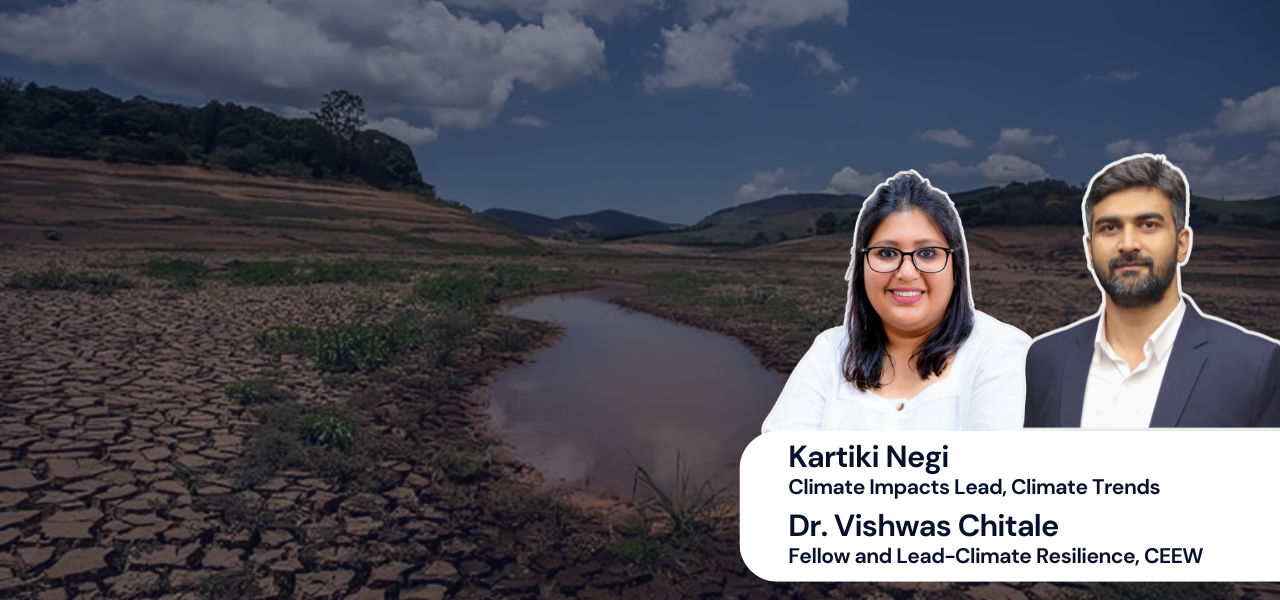

Extreme heat is no longer just a seasonal inconvenience. It is now the most pervasive and under- recognized risks which can distort India’s growth plans. As temperatures rise, the impacts are being felt across health systems, labour markets, agriculture, and energy demand, yet the issue remains fragmented in how it is understood and addressed.
We present a special two-part series exploring how heat is emerging as a defining climate and development challenge, and explore probable solutions.
For the first part of the series, we are joined by Kartiki Negi and Dr. Vishwas Chitale to understand the science of heat and its growing prominence in India’s climate reality. We discuss the challenge of data collection, under-reporting, and poor understanding of heat in the public discourse, and how it evolves into a living and livelihood crisis.
Negi is Climate Impact Leads at Climate Trends, where she builds compelling narratives on the impact of extreme climate change and extreme weather events across socio-economic sectors. Dr. Chitale is a Fellow and lead-Climate Resilience at the Council on Energy, Environment and Water. His work focuses on assessing risks and building resilience. His latest report on heat data highlights the growing intensity of heat stress across India and the urgent need for better data, stronger heat action plans, and climate-resilient systems
Listen to the episode with full transcript here in English
[Podcast intro]
Welcome to Season 6 of the India Energy Hour podcast. This podcast explores the most pressing hurdles and promising opportunities of India’s energy transition through an in-depth discussion on policies, financial markets, social movements, and science. Your hosts for this episode are Shreya Jai, Delhi-based energy and climate journalist, and Dr. Sandeep Pai, energy transition researcher and author. The show is produced by 101 Reporters, a pan-India network of grassroots reporters that produces original stories from rural India. If you like our podcast, please rate us on Spotify, Apple Podcasts, or the platform where you listen to our podcast. Your support will help us reach a larger audience.
Extreme heat is no longer just a seasonal inconvenience. It is now the most pervasive and under-recognized risk, which can distort India’s growth plans. As temperatures rise, the impacts are being felt across health systems, labor markets, agriculture, and energy demand. Yet the issue remains fragmented in how it is understood and addressed. We present a special two-part series exploring how heat is emerging as a defining climate and development challenge and explore probable solutions. For the first part of the series, we are joined by Kartiki Negi and Dr. Vishwas Chitale to understand the science of heat and its growing prominence in India’s climate reality. We discuss challenge of data collection, under-reporting, and poor understanding of heat in the public discourse, and how it evolves into a living and livelihood crisis. Negi is Climate Impacts lead at Climate Trends, where she builds compelling narratives on impact extreme climate change and extreme weather events across socioeconomic sectors. Dr. Chitale is Fellow and Lead- Climate Resilience at the Council on Energy, Environment, and Water. His work focuses on assessing risks and building resilience. His latest report on heat data highlights the growing intensity of heat stress across India and the urgent need for better data, stronger heat action plans, and climate resilient systems.
[Podcast interview]
Shreya: Hello and welcome to the India Energy Hour. Thank you so much for joining us here today. Thank you, Kartiki. Thank you, Vishwas. We are going to discuss a topic that touches everyone’s life. It is a topic that we agree we have not touched upon much often, but I think it is high time that it is discussed at a platform like this because it will have far-reaching impacts. So thank you again for joining us here and discussing such a hot topic, pun intended, on the impacts of heat.
Kartiki: Thank you, Shreya.
Vishwas: Thank you, Shreya, for having me on the show.
Shreya: So as I was mentioning, we are going to discuss about heat and heat impacts, and it is a topic. It is something that impacts everyone’s life. It is not just a laborer who’s out there working in the field. It is the agriculture sector. It is the energy sector. It is the health workers, frontline workers, everyone. It will have far-reaching impacts on all aspects of the economy. But before I jump into this topic, our listeners would love to know a little bit about yourself. I’ll start with you, Kartiki. Me and you come from the same pedigree of journalism background. And as fate would have it, we also now work in the same organization. But I’ll stop myself here. You have been working on climate impacts, weather analysis, linking it with socioeconomic impact and writing beautiful pieces on that. Can you tell us a bit about yourself and your journey?
Kartiki: Well, thank you, Shreya, first of all, for having me here. You have already given an introduction about my previous work. But yes, right now I’ve been writing about climate impacts for about 10 years now. And so I basically, I’m at the crux of, you know, I’m at the intersection point of climate change and its impact. So basically, my expertise lies in climate science with a special focus on how, you know, how climate is changing, how it is impacting and, you know, its impact, its socioeconomic acts on people and livelihood. So, you know, I almost simplify the complex science into a layman language so that, you know, people can basically understand it better and understand how it is affecting their common lives. So that’s how it is. Yeah, thank you.
Shreya: But before I move on to Vishwas and ask about his very rich journey, I want to ask from you just from a very journalistic curiosity. Have you seen a change in how weather or now climate and climate impact is being reported across mainstream media?
Kartiki: Well, that is a very interesting question. You know, I’ve been writing on it for so many years and I still get very much surprised when every day a journalist comes and, you know, ask us a very, very basic questions. Of course, I would definitely say that, you know, all the national level publications, they do understand. There are a few handful of journalists that they really understand how climate change is playing and, you know, changing the weather and whatever is happening around us. But, you know, regionally, if you speak, there’s a lot, lot of lot, lot and lot gap. There’s a very large gap. They still are not able to, you know, relate climate change with the extreme weather event. For example, there will be so much of a heat wave with temperatures touching 48 degrees, 50 degrees. And when you go out and, you know, read those news reports, they will only say that, okay, these temperatures went up to this degree, a record broken, but they do not mention climate change. I was also a part of a study for Reuters Institute of Journalism at Oxford. And there we were reporting that how, you know, heat waves are being reported in India. So you will be very surprised that there were very stark numbers when it could, it was easily established that people still do not relate climate change with the extreme weather events. So, yeah, there is still a very big gap.
Shreya: Rightly so. And let’s hope we can, you know, discuss that going forward and in some way through this discussion, try to bridge that gap. I come to you, Vishwas. You have worked across national, international organization, across a variety of issues with some way, in some way or another, as I was going through some of your work has been in some way related to heat or heat impacts, if I can say so. Can you tell us about your professional journey and how it all led you towards this particular topic? And now you’re working on a very interesting segment on heat and its data mapping, etc. So can you tell us a bit about that?
Vishwas: Sure. Thanks. I mean, to summarize my journey in a few minutes, it’s going to be challenging, but I like challenges. So, I mean, I would go back to 2014 when I completed my PhD from IIT Kharagpur. And my PhD topic was to understand climate change impacts on biodiversity hotspots in India. And then after that, I joined ICIMODE, International Centre for Integrated Mountain Development, started working on Himalayan ecosystem, started working to understand how the changes have happened in the way the forests function in the Himalayan ecosystems, like the changes in phenology, et cetera. And all of it is linked with heat, as you’re saying. And actually there I led a couple of programs. So your work on the right hand was to study the changes in forest fire patterns and using remote sensing data to bring changes into the practice in which forest fire management happens in Nepal. and we had some insightful like you know processes there and we were able to bring some changes into the practice by actually understanding that the leaf fall pattern has totally shifted in terms of a couple of months so usually the leaf fall would happen in Nepal in early January mid-January but it had shifted by two months and it started happening in march while the forest fire management practices were happening in the traditional way still in January so we were able to bring that change into the practice and that kind of really helped me understand how the whole climate change adaptation process happens and how do we bring scientific evidence really to bring the change in the practice and work with the decision makers and then after that I was part of the team that contributed to Nepal’s national adaptation plan also gave inputs to Bhutan and Myanmar’s plans as well and that was kind of a deep dive for me to get into the space of climate change adaptation and it continued so I was really dragged towards climate change adaptation significantly due to these processes and then I moved back to India in 2022 and started working with Giz and I led their ai for climate action program there so it was again a lot of exposure towards new age technology use of AI we worked with NITI I very closely to look at the use cases of ai for climate adaptation and all and then since almost last three years I am with CEEW leading the Climate Resilience team and it has been quite a like you know enriching journey to work with various states and also to see how things have advanced in case of India in terms of looking into the new research as well as bringing out new insights on the topic of heat risk and also really how it is being dealt at the very local scale so it has been all in all I mean quite a bit of a like you know enriching journey as such in last 10 12 audios
Shreya: Absolutely and your journey is a good segue into our topic and I’ll start with a very broad questions which is that heat waves are no longer very isolated there are recurring problem and they are happening across all regions in the country in different at different time period or during the same months how do we understand this shift as someone who’s affected by heat also someone who’s trying to study heat and you know from both from the data perspective research perspective and writing perspective what are we still getting wrong about understanding extreme heat I’ll ask I’ll ask Vishwas for you to start first.
Vishwas: Sure so as you rightly pointed out Shreya I mean of course heat waves have increased significantly in the past few years and I will just bring some statistics for the ease of understanding here so last year we published a study on district level heat risk index for India that basically defines that okay like we all understand that heat waves are happening but apart from temperatures or apart from daytime temperature what else is causing the heat risk to be very high in many Indian districts and we looked at a combination of 35 different variables for all the districts of India and the findings are quite staggering the findings suggest that nearly 60 percent of districts in India which cover nearly three-fourths of India’s population falls in high to very high heat risk and not necessary that these districts are facing recurrent heat waves so that’s also an important aspect like you know heat waves might be coming and going but the risk to extreme heat remains there and also in many places in many states we are seeing that the overall duration of summer has increased by quite a bit and that is what is becoming like the new reality I am here in Pune and the temperature like day before yesterday was 41 degrees Celsius. In Pune in my whole life I have never seen such high temperature and this is just in the month of April already so this is like as you said this is becoming the new reality also I mean yeah I mean maybe we can talk about daytime temperatures but what is also happening is the nighttime temperatures are increasing quite significantly and that is we call it kind of a silent killer which impacts human bodies in a very different way it leads to dehydration excessive exhaustion etc., and which puts a lot of stress on the humans as well as other living beings, so we have to really move on from also just the approach of looking at how the daytime temperature is behaving while we should also focus much more on the changes in the night time temperature and the relative humidity as well.
Shreya: Right, we will go a little deeper into data and measurement gaps but from the perspective of reporting on this Kartiki do you think that extreme event is still treat extreme heat sorry is it still treated as a sporadic weather event and not you know deeply reported deeply written about and which in turn obviously has a ripple effect on how policymakers look at it but just from the you know a point of view of reporting it talking about extreme heat in various communications channels mainstream media you know conventional unconventional media what are your thoughts.
Kartiki: So as I said you know I’ll also start with some kind of statistics only so in the I will talk about the 2022 heat wave which was kind of like there was a heat wave in 2022 which was reported so that showed that only 14 percent in the I’m talking about English media first only 14 percent of the English articles linked heat wave to climate change it was less than 10 percent for Hindu, Hindi Telugu and Marathi and you know while 67 percent of Hindi articles used direct binary causation that’s you know caused by climate change so I’ll while you know everybody will say everybody do write about that you know heat wave and they’re increasing so they are kind of becoming new normal people are writing about heat waves but again their connection with climate change is again missing incense you know it’s you know we are treating it very wrong we are just treating it as a temperature issue and okay temperatures risen to this certain degree and all that it is basically a public and public health and a systematic risk so basically we do not talk about like as Vishwas said we do we are not talking about rising night temperatures or rising humidity which actually tests human body’s ability to recover from the heat wave so you know these are the points that are really missing from the narrative we are really underestimating the impacts you know how it is impacting the vulnerable one especially the outdoor workers vulnerable in terms of women children elderly how it is impacting their health how it is impacting their mental health we are even who says that you know in in the in the heat wave scenario the nighttime adequate nighttime temperature should be 24 degree Celsius for a body to recover itself during night times but that is we are not giving the kind of focus that we need on you know when we are reporting on the heat wave issue we are just treating it as a temperature issue whenever there’s a report they will only write that temperatures have gone up to this much it has broken this record but not any other connection
Shreya: absolutely that that’s a fantastic point that there is no linkage that is being done you with public health or for infrastructure creation which could actually allay some of these concerns on high temperature especially nighttime and humidity Vishwas i remember during one of your presentations I think at the Mumbai climate week you had talked about you know collection of data how it is very difficult though there is some national level data available there is still a lot of gaps in data and data collection that is done at regional and local level and then it leads to kind of a domino effect where local policymakers or local researchers are not able to present the problem and they would want it to be can you explain that point a little bit more and tell us how that gap can also be fixed
Vishwas: Yeah ,sure. So I think yeah, I mean when it comes to data and especially in terms of overall climate change impacts i think climate change in that sense is a fairly I mean i would say new topic for many administrators as well as maybe many of the folks who are working at very much at the local scale because climate change also is a fairly complex topic to understand when we talk about heat or when we talk about heat related illnesses or when we talk about again as I said changes in daytime temperature nighttime temperature etc. I feel that I mean so far it is not very well understood it might be understood in parts by the state level decision makers or administrators etc maybe also there are examples in in the cities which have heat action plans maybe the local administrators also understand it but i feel that there is much more requirement or much more need to work on strengthening the capacity at the local scale to understand the importance of this kind of data now if we look at a national level program on climate change and human health under ministry of health and family welfare, there are guidelines of capturing the data on heat related illnesses and there is the IDSP portal on which every 24 hours the data has to be uploaded by the local level health officials but when we are looking at say heat related illnesses as one of the key issues at the ground level the identification of utility illnesses or treatment of utility illnesses etc there are like you know there are still capacity related challenges because again the protocols are still getting defined the guidelines exist but implementation is still being like you know in place etc so in that case i feel we need to work on strengthening the capacity that the local scale to document the data to first of all understand the importance of this kind of data and then i think in the coming years India will have a very rich data set that we can look at and that will really tell us like say for example I will just tell you that in case of Ahmedabad heat action plan it is first city level heat action plan in south Asia so when the plan was developed in 2015 and in in one of the studies from based on Ahmedabad heat action plan I had seen a very interesting graph that at what degree Celsius temperature does the increase in heat related deaths start spiking up rapidly and this was possible because Ahmedabad was collecting that data for a few years and they were able to correlate it with it and then i mean this is the time of 2015 2016 that time we were very able very well able to we can see it in the graph we can see that after 43 degrees Celsius there is a sudden spike in the number of heat related illnesses and heat related deaths which means that that time Ahmedabad had that kind of threshold that people were able to tolerate up to 43 degrees Celsius but beyond that it was becoming kind of a really like you know kind of impactful temperature when there was sudden increase in the temperature and a sudden increase in heat related illnesses and mortalities so if we are able to document such evidence from various cities in India then the alert that IMD gives out on say 24 hour forecast or 72 hours forecast and if we are able to correlate that okay now at 41 degrees Celsius maybe x city has a threshold that suddenly there is a like no likelihood of increase in heat related illnesses the preparedness and immediate response should be ramped up so really to get that kind of decision making aligned in real time i think we have to work on establishing these kind of data documentation standards and also work on them and really bring out that evidence that decision makers will be able to appreciate that okay because we did x y and z in terms of documenting and capturing this data and maintaining it over the years we are now able to enhance our real-time decision making capacity I think once we are able to show that then of course everybody would be able to understand the importance of it
Shreya: Right. Absolutely and good you mentioned it because I wanted to go into this deeper that even when data does exist it doesn’t you know translate into kind of a public urgency or a policy action or the kind of urgent policy action that one would expect on an issue like this in a country like this where you know you have eight months nine months of summer now extreme heat events across all regions I would want both of you to jump in but I’ll start with you Kartiki in your conversations with policy makers both at national state and at regional level where do you think the lacuna is that you know data is present there are enough instances now which are less than enough to have a forward-looking plan for managing heat or to have a heat action plan which is actually doable why it doesn’t translate into like it should
Kartiki: Well, so I won’t say that you know the there’s a lot of work that is going on and especially with NDMA taking the lead and all these places but you know but the heat remains under communicated I feel it’s because it’s often a silent and a slow onset disaster it doesn’t come like you know with the same visual impact as you know there are floods cyclones even though you know if it can be just as deadly as the others are we also tend to report temperatures you know right not impacts I will say this again and again so the real risk to health the livelihoods and you know and if you talk about productivity doesn’t fully come through so i feel in my view to do better we need to shift from reporting numbers to reporting risk especially linking heat to hospitalizations worker productivities and the economic loss for policy makers while i think Vishwas could weigh in more um but you know framing heat as a public health and economic issue and not just an extreme weather event it’s the key and most importantly the communication also needs to be local at the regional level it should be timely and actionable so you know that people should know that okay it’s not just that it’s hot but also what it means that you know what they should do what are the changes that they need to bring in their lifestyle so yeah I feel that this is it this is what is missing
Shreya: sure Vishwas you want to respond to what Kartiki just mentioned and also if you can you know touch upon a bit of a social aspect to it because heat it might affect everyone but to the most least privileged part of our population the lowest strata of the society are the ones who are in the first line of impact do you think that there is not much hue and cry over heat as a disaster action because obviously the imagery is missing but also because you know the kind of population that is impacted the most if i can say so please weigh in.
Vishwas: Yeah I mean heat as I said also is a fairly new topic for many of the folks like you know I mean just again as Kartiki said we just keep on talking about temperatures and not really talk about impacts and also very simply like I mean if we were to talk with say some lay person who does not at all understand about heat risk index i would simply say that the summer that used to that they used to experience 10 years back is not the same summer anymore in very simple terms and it could be daytime temperature nighttime temperature but if you are walking outside now for five six hours in this summer it is significantly going to have impacts on your health I mean as simple as that so this is the language that we need to now start using to communicate these kind of things but to your point Shreya. I think in terms of dealing with heat I will just talk about little bit about the disaster risk financing landscape and some of the changes that we have seen so 15th finance commission that was active till march 20 march 31st 2025 2026 considered only four hazards for defining the disaster risk index and finance commission is something that looks at disaster management fund basically any kind of funds that are related to disaster based allocation comes from allocations of disaster risk index of finance commission now 15th finance commission looked at four hazards – landslides floods cyclones and droughts because the infrastructure economic losses overall losses etc. because of these hazards are much more visible if a flooding occurs the city gets flooded you can see that okay half of the buildings are submerged etc there is this much of loss to infra but when a heat wave occurs you are not really able to see that okay what kind of infra loss has happened and why we need to allocate financing for it but we worked very closely with the 16th finance commission team and actually we were able to share the scientific evidence from our heat risk index report as well as various other literature that is available and we were like you know working closely with them to understand their inclination towards inclusion of heat as one of the nationally notified disasters. Now all this effort went on for almost last two years and 16th finance commission when it was announced and recommended I mean tabled in the parliament during the finance minister’s speech for budget this year now we know that 16th finance commission has recommended heat waves as a nationally notified disaster which is a big win for all of us for from heat ecosystems but also for all the citizens because if heat waves is included in the nationally notified disasters so far there are 12 now heat waves and lightnings are recommended to be included there which will make the list of 14 and the total part of disaster management fund that is available for all the states for next five years the total is two lakh i mean in terms of two lakh crore Indian rupees which means that there is no restriction for any state on using heat for per like heat related funds for any specific activity the overall pod is available and the states now should take up much more proactively on mitigation related activities preparedness related activities and all this finance can be unlocked through disaster management from fund from 16th finance commission. So this will help really address that challenge at the very local scale and if we are to look at the informal sector the informal settlements many of these settlements also the affordable housing schemes that are coming up etc. so I think there is a real opportunity to utilize some of these funds available from 16th finance commission to look at how heat mitigation I mean how heat impacts can be already mitigated in the structure of some of these schemes as well as in the informal sector how some of the schemes like I know in in some cases in the past parametric heat insurance has been successful to some extent all or cool roofing green roofing has been successful to some extent so how the state or city prioritizes on some of these key actions is able to understand that okay if we are able to implement x solution you can cover like you know maybe 10,000 population and this is the per person kind of cost to implement that kind of solution so I think we have to move towards that direction to see how different solutions can be implemented at scale and really document that evidence also in terms of their return on investment meaning that the cost benefit analysis of these kind of solutions can help us even implement these further in many other states.
Shreya: A very interesting and heartening development I hope it goes through where we wanted to go you mentioned the states and how states can follow suit Kartiki you work with several states one being Maharashtra where we are listening from you only that they are taking some you know steps in the right direction on heat data collection heat management and planning with heat mitigation plans etc which would start at both ends of the spectrum one is data collection then that communication and also seeing how it translates into policy can you give this can you explain this example from the lens of Maharashtra on what that state is doing and in in in what direction are they taking in in heat management
Kartiki: Yes, so my in Maharashtra so they’ve finalized they have updated their state action plan for climate change and through this they are so again Vishwas is like one of the curator for that state action plan for climate change but then you know what I get through that plan they plan to take adaptation and mitigation measures across different sectors whether it’s for whether it’s for MSME or whether it’s for health whether it’s for you know different mitigating mitigating policies whether it’s you know-how about keeping the mangroves alive you know all the all the actions that a state government could help in mitigating these impacts that are rising from the rising global temperatures or the global warming or climate change whatever you want to say so so they are doing they’re doing some very good work and if implemented you know how the according in their words these plans would actually help for example for the MSME sectors it will help people under MSMEs to you know better adapt and with that policy they can they can I think they can actually help themselves from you know getting lost because of the crisis because of the climate change because we see a lot of temperature that affects small small and marginal industrialists and even you know the industries are quite affected with it their production it is also affected then labor productivity has also come down so with that you know with these kinds of state action plans it is the government is trying to safeguard the interest of of the ecosystem that we have so yes so yes similarly it is with Tamil Nadu also we work with Tamil Nadu government also they’re doing a lot they’re giving lots of emphasis on again as I said mangroves that defend that actually you know saves them from the cyclone the saline hydration of water then what you know actually telling spreading a lot of awareness about climate change and you know there’s some these governments are they’re trying to spread awareness from the grassroot like you know from telling children like children from schools you know making them aware of how climate change is impacting us and how you know they can adapt these things in their life right from the beginning so that they’re able to you know adapt themselves better so yes a lot of governments these are these are the two examples but the other governments are also working in these directions
Shreya: Thank you. Two very interesting examples Maharashtra and Tamil Nadu these are also the two states which are highly industrialized where we see the impact of heat not having just on a common person but large-scale industries MSME is also facing the impact of heat in terms of loss of manners impact of impact of heat on their production on their factory floor etc I’ll come to you Vishwas. Your recent work at CEEW highlights this kind of risk that industries face you know heat distress what the risk that arises from exposure to heat distress and also to fragmented data systems and very limited climate risk disclosure so how do these data gaps actually constrain decision making among these firms both large industries and MSME can you talk about that please ?
Vishwas: Yeah sure, so I think I mean there has been some research in the past that tells us that by 2030 India is going to lose nearly six percent of its daily working hours to extreme heat which means that the conditions in which currently people are working will no longer be liveable or workable because of the extreme temperatures and this is likely to lead to the loss of equivalent of 34 million full-time jobs and again this is going to impact nearly five percent of India’s GDP, so these are again like you know some of the statistics when it comes to industry it is all about the like you know the bank sheets or the books and what kind of profit loss they are going to suffer because of the impacts of heat but when it comes to MSMEs and since you highlighted that point MSMEs are generally much more vulnerable to these kind of impacts even much more than the normal large-scale industries because of their limited financial capacity because of their limited resilience capacity as a whole that’s where I think much more focus is needed on MSMEs as well and I think in many cases in India MSMEs are also run at the very household level very much in the neighbourhood level where also the infrastructure availability and the solutions that we have been talking about like cooling solutions etc are very difficult to implement so I think what we need in terms of addressing these MSME-centric challenges is of course the innovation in technology and innovation in solutions landscape that can be delivered even as cooling as a service or rental system etc so that MSMEs are also able to access it and they don’t necessarily need to invest large amount of money in implementing these solutions but also like all in all we worked with the Confederation of Indian Industry last year and we developed a framework to assess physical climate risk of Indian industry and we piloted this framework in three clusters one in Maharashtra for dairy and food processing industry one in Odisha for i think it was for steel and iron and in Tamil Nadu for automobile manufacturing and especially in Tamil Nadu some of the discussions with the local industries was quite enriching because they had that memory of 2015-16 Chennai floods very fresh in their minds and they were able to correlate with it and also they were able to say that okay like because the industrial areas are very close to the large cities which are already facing a lot of challenges due to extreme heat then eventually the industrial area also is facing these kind of challenges so i think in 2015-2016 Telangana and Andhra had come up with the concept of climate resilient industrial parks kind of concept so i think i mean some bit of work has happened on that but we will need to further deepen our research and look into what are the ways in which the industrial parks can be planned and if really by being closer to the city the industry is going to face much more challenge then can we really move it to the remote parts and really see that at least the overall impacts of heat are much more reduced in that sense so by location or proximity we are able to reduce these kind of impacts but also when it comes to labor loss and when it comes to productivity loss i think yeah i mean i totally agree with you not many industries are currently documenting these kind of impacts and maybe they might be implementing some part-time solutions or temporary solutions like putting out cooling fans or fogging fans etc but i think i mean if a industry is a large-scale industry they really need to think about how do they enhance the ventilation and overall passive cooling of the industrial plant as a whole because putting out active cooling solutions is going to put a lot of economic burden on them because the electricity bill is going to shoot up rapidly and the effectiveness of this this cooling solutions is not going to be sufficient so i think i mean as a whole we have to look at how heat impacts the economy as a systemic risk and also how industry can adopt some of these solutions to much more effectively address it because as i said again it is all about balance sheets and it’s all about books and profits and losses for the industry but if the industry has been able to sustainably implement some of these solutions i think the returns are likely to be seen in the next few years
Shreya: Those are very fascinating insights and so many threads each going in a different direction in terms of both planning and impact you talked about energy demand you talk about how industries need to plan there needs to be a change in how they manage their labor how they manage their operations you know the whole you have to reimagine a whole factory floor in itself Kartiki that reminds me of this very interesting discussion that you know you and some of the colleagues at climate trends hosted in Mumbai along with the world trade centres and we had in the room some of you know leading speakers from the MSME industries who represented textiles metals etc also we had private financiers who talked about how more money needs to come in into heat planning and adaptation planning among industry segment especially MSME can you briefly touch upon some of the key takeaways and do you think that the MSME sectors and the private financing is moving in that direction where heat is becoming a big variable into how they make their future business plans
Kartiki: Okay so I’ll answer the first question first. So yes, there were many people across the industry that came for that roundtable and then we discussed that how heat is a bigger risk increasing heat stress actually so you know some of the like one of the representatives from ITC which works across the supply chain they kind of agreed that you know the challenge is to assess the risk that these companies can face in future and you know how can they can create an conducive environment for workers so they basically identified some key location where heat is always an issue but the heat stress will increase multi-fold in the coming in the coming future and which is going to impact both their operations and labor so some of them also highlighted that there’s a lack of data for risk assessment and future planning so you know they’re building so they’re trying to build a controlled environment through which you know they can have an in-house capacity building and utilizing these traditional traditional techniques then there are also high labor density that that raises not just the productivity and the labor issues but that also raises fire and safety risk especially in the extreme heat timings which directly affects workers safety so women workers they are disproportionately impacted with these consequences that can carry over to the next generation so we then they also require a stronger compliance and workplace standard standards which as of now over the all these places did had some but they cannot these things cannot be optional anymore so you know these are the some of the some of the challenges they’re facing and you know industry is already talking about then if you talk about especially there was a person from MSME where then they say that we first need to understand it you know how the heat has historically affected their institution so basically heat risk is not uniform it is something different for another sector and different for another the other sector so as Vishwas also said that you know MSME faces different exposures compared to the banks or some other organization so the real question is that how capital is being allocated toward these technologies and investments that actually reduce the heat risk so now the question comes here so you know to answer this we also had a person from Union Bank of India their representative now they have some they also have their own challenges they say that you know they said that you know until now the risk assessment was mainly focused on floods and droughts where you can actually measure the losses but heat is clearly you know that that’s an emerging one as in a material risk so they are also in process of building some comprehensive climate risk system in the coming in the coming years along with sector-wise vulnerability assessment tools so this is what in parallel to reserve bank of India which is also developing a broader climate risk framework so yes these kind of frameworks now will decide the future will decide basically how we adapt and mitigate these heat risks in the coming in the coming years but now talking coming down to finance so that remains a challenge how how do we gather public finance how when how much to whom then you know that again remains a challenge well
Kartiki: thank you Kartiki on the question of finance which was you did mention about the work that you did with the finance commission and how it will trickle down to the work that states and regions and local areas local administrators are doing what are your thoughts on unlocking private finance and I asked this both from the lens of you know seeing heat as a business risk but also including heat as part of ESG framework and seeing how it can unlock kind of finance for adaptation towards heat both for bigger industries and for MSMEs
Vishwas: yeah so in terms of private sector I think I mean of course people have been talking about how do we bring in much more private sector finance for adaptation but I think everything comes and like you know kind of get stuck at the point of the ROI what is the return on investment from for private sector there because again like you know it’s a business so you will need to make profit out of it but I think I mean as I said cooling as a service has a huge potential in the market and if you like you know even if you start from small individual level solutions and maybe in the market now you are seeing much more people using those individual fans when they are walking around I think I mean five years back these fans did not exist so this is an innovation so this is an innovation people are able to use these fans and they are able to keep themselves cool at wherever they are and these are very handy kind of mobile kind of solutions so if we talk about such solutions I think the market is huge I think what is needed is some kind of incubation program to look at how to develop these solutions and make business models out of this I think many startups have picked up on this I have seen like you know some of the examples of passive cooling technologies etc but the scale is missing currently in there because maybe the business models are not well thought of but as I said I mean heat itself can become one of the subsectors of climate change related industry and when we talk about say air conditioners of course like you know they have been in existence since many years but how many people have really thought about the heat that their conditioner exhaust puts out and then kind of increases the outside temperature and then vicinity so we need to work and we need to innovate on these kind of technologies that exist but also I mean there are two aspects to it one is of course industry looking at their own resilience and trying to implement some of the key solutions and really understanding from it that okay how they were able to reduce the productivity loss by implementing particular solutions and from that learning itself also that industry might want to pick up on implementing it at scale and really make a business out of it so I mean I mean these kind of opportunities do lie there I think it is only about exploring these kind of technologies and also like in terms of many other countries like if we look at middle east if we look at southeast Asia I mean heat like in case of middle east it is very dry heat but also temperatures really going beyond 50 degrees Celsius and people have been coping with these kind of solutions to really deal with the productivity losses while in southeast Asia the humid heat is there and has been there in existence in Singapore and many other southeast Asian countries but they have also been able to overcome these kind of challenges by implementing certain solutions at scale so I think we have to look into these kind of examples and really see what is the contextualization that can be done for India centric environment and say if we pick up on large-scale manufacturing industries etc which cannot afford to go through losses just because of productivity losses I think these kind of industries need to implement these solutions at scale at I mean with the urgency so I think these kind of things exist currently I am aware of like you know certain like you know a few organizations running innovation programs for cooling solutions as well and I think H T Parekh Foundation is one of those WRI also has announced some of the calls for implementation for development of cooling solutions etc so I think we need to see much more action on that front in the in the landscape which will unlock much more of private sector interest to come into this space and then eventually of course it will come with finance I will just add one more example parametric heat insurance as I said has been there for many years for some reasons it worked for some reasons it did not really work and if we are able to address the barriers of it I think it is again like you know definitely one of the key private sector investments or private sector partnerships that we can unlock through parametric heat insurance or risk pooling mechanisms etc so these kind of opportunities need to be explored and that too at scale
Shreya: Thank you for addressing this in in such a comprehensive manner with so many threads and I really want to explore all these threads but we are short of time so I’ll move on to my last question and this is to both of you I’ll start with Vishwas and then I’ll let Kartiki have the last word so looking ahead this is a forward looking question what is that one change that you would want in India’s response to extreme heat and heat and that one change in data communication policy and industry practices one each where do you think one of the significant change that needs to happen Vishwas
Vishwas: Yeah thanks, yeah so in terms of data systems I think we need to document the evidence at the local scale and that’s how we will be able to enriching our data systems and the trends etc will be much more visible in terms of communications yeah I think I will echo what Kartiki had said in terms of communicating impacts rather than just talking about temperatures which people cannot relate to industry practices I think yeah learning from each other’s experience and knowledge sharing or peer-to-peer learning in that that case would work pretty well policy I think we are seeing already a lot of development on the policy front but if we are able to see conversion of policy into action like implementation of cooling solutions at scale etc i think that would bring significant change into the ecosystem of heat as a heat resilience in India
Shreya: Thank you, thanks a lot. Kartiki, what is your idea of change across these four segments
Kartiki: For these four segments, I think I’ll start with the communication first so this you know as I’ve already said that heat remains under communicated if I had to prioritize one change it would be to treat it as a more public health emergency and institutionalize heat action plans across all the levels and they should not be as guidelines but as enforceable systems so now this means integrating early warnings health systems labor protections and urban planning like in one coordinated response so right now you know all these efforts are fragmented so and coming on especially from the communications point of view I would would say the biggest shift would be move from reporting temperature to communicating risk and impact we need to stop saying that it’s 40 degrees Celsius and we should start saying that you know what it means in terms you know what it means for health what it means for work hours what it means for productivity and survival especially for the vulnerable communities you know making heat visible through localized and actionable messaging will be able to drive both public emergency public urgency and public response so I feel that this could be the biggest shift
Shreya: Thank you, thank you so much. Thank you, Kartiki. Thank you , Vishwas. This was an enlightening conversation, and I hope this kind of prompts much more communication on heat and heat impacts and as Kartiki has now mentioned and we will also try to do that that the conversation around heat cannot just be on temperature alone it needs to go beyond that it needs to talk about risk it needs to talk about impact and how a human body or a worker or anyone sitting inside or outside the office faces it so thank you to both of you for this very insightful conversation I had a great time and I hope the audience will be learning a lot of new things through this conversation
Kartiki: Thank you.
Vishwas: Thank you, Shreya for having us.
[Podcast outro]
Thank you for listening to The India Energy Hour! Subscribe to this channel to never miss an update. To drop us a feedback, visit our website or write to us at [email protected]
We are on Twitter. You can follow @tieh_podcast and get in touch with 2 hosts @shreya_jai and @sandeeppaii
[end]
Listen to the episode with full transcript here in Hindi
हीट सीरीज़: संकट, डेटा और इनकार | कार्तिकी नेगी और डॉ. विश्वास चितले
गेस्ट: कार्तिकी नेगी, क्लाइमेट इम्पैक्ट्स लीड, क्लाइमेट ट्रेंड्स और डॉ. विश्वास चितले, फेलो और लीड-क्लाइमेट रेजिलिएंस, CEEW
होस्ट: श्रेया जय
निर्माता: 101 रिपोर्टर्स , पूरे भारत में जमीनी स्तर के रिपोर्टरों का एक नेटवर्क है जो ग्रामीण भारत से ओरिजिनल स्टोरीज़ तैयार करता है।
[पॉडकास्ट परिचय]
इंडिया एनर्जी आवर पॉडकास्ट के सीज़न 6 में आपका स्वागत है। यह पॉडकास्ट पॉलिसी, फाइनेंशियल मार्केट, सोशल मूवमेंट और साइंस पर गहरी चर्चा के ज़रिए भारत के एनर्जी ट्रांज़िशन की सबसे बड़ी मुश्किलों और अच्छे मौकों को दिखाता है। इस एपिसोड के लिए आपके होस्ट दिल्ली की एनर्जी और क्लाइमेट जर्नलिस्ट श्रेया जय और एनर्जी ट्रांज़िशन रिसर्चर और लेखक डॉ. संदीप पई हैं। यह शो 101 रिपोर्टर्स ने बनाया है, जो ज़मीनी स्तर के रिपोर्टरों का एक पैन-इंडिया नेटवर्क है जो ग्रामीण भारत से ओरिजिनल स्टोरीज़ बनाता है। अगर आपको हमारा पॉडकास्ट पसंद है, तो प्लीज़ हमें Spotify, Apple Podcasts, या उस प्लेटफ़ॉर्म पर रेट करें जहाँ आप हमारा पॉडकास्ट सुनते हैं। आपका सपोर्ट हमें ज़्यादा लोगों तक पहुँचने में मदद करेगा।
बहुत ज़्यादा गर्मी अब सिर्फ़ एक मौसमी परेशानी नहीं रही। यह अब सबसे ज़्यादा फैला हुआ और कम पहचाना जाने वाला रिस्क है, जो भारत के ग्रोथ प्लान को बिगाड़ सकता है। जैसे-जैसे तापमान बढ़ रहा है, इसका असर हेल्थ सिस्टम, लेबर मार्केट, खेती और एनर्जी की मांग पर पड़ रहा है। फिर भी, इस मुद्दे को कैसे समझा और सुलझाया जाता है, यह अभी भी बंटा हुआ है। हम एक खास दो-पार्ट की सीरीज़ पेश कर रहे हैं, जिसमें यह पता लगाया जाएगा कि गर्मी कैसे एक तय क्लाइमेट और डेवलपमेंट चुनौती के तौर पर उभर रही है और इसके संभावित समाधान तलाशे जा रहे हैं। सीरीज़ के पहले पार्ट में, हमारे साथ कार्तिकी नेगी और डॉ. विश्वास चितले हैं ताकि गर्मी के साइंस और भारत की क्लाइमेट की सच्चाई में इसकी बढ़ती अहमियत को समझा जा सके। हम डेटा कलेक्शन, कम रिपोर्टिंग और पब्लिक बातचीत में गर्मी की खराब समझ की चुनौतियों पर चर्चा करते हैं, और यह कैसे जीने और रोज़ी-रोटी के संकट में बदल जाता है। नेगी क्लाइमेट ट्रेंड्स में क्लाइमेट इम्पैक्ट्स लीड हैं, जहाँ वह सोशियो-इकोनॉमिक सेक्टर में बहुत ज़्यादा क्लाइमेट चेंज और बहुत ज़्यादा मौसम की घटनाओं के असर पर दिलचस्प बातें बताती हैं। डॉ. चितले काउंसिल ऑन एनर्जी, एनवायरनमेंट और वॉटर में फेलो और लीड-क्लाइमेट रेजिलिएंस हैं। उनका काम जोखिमों का आकलन करने और लचीलापन बनाने पर केंद्रित है। हीट डेटा पर उनकी नई रिपोर्ट पूरे भारत में हीट स्ट्रेस की बढ़ती तीव्रता और बेहतर डेटा, मज़बूत हीट एक्शन प्लान और क्लाइमेट रेजिलिएंट सिस्टम की तत्काल ज़रूरत पर प्रकाश डालती है।
[अंत]
[पॉडकास्ट साक्षात्कार]
श्रेया: नमस्ते और इंडिया एनर्जी आवर में आपका स्वागत है। आज यहां हमारे साथ जुड़ने के लिए आपका बहुत-बहुत धन्यवाद। धन्यवाद, कार्तिकी। धन्यवाद, विश्वास। हम एक ऐसे टॉपिक पर बात करने जा रहे हैं जो हर किसी की ज़िंदगी से जुड़ा है। यह एक ऐसा टॉपिक है जिस पर हमने ज़्यादा बात नहीं की है, लेकिन मुझे लगता है कि अब समय आ गया है कि इस तरह के प्लेटफॉर्म पर इस पर बात की जाए क्योंकि इसका दूरगामी असर होगा। तो यहां हमारे साथ जुड़ने और गर्मी के असर जैसे हॉट टॉपिक पर चर्चा करने के लिए आपका फिर से धन्यवाद।
कार्तिकी: धन्यवाद, श्रेया।
विश्वास: श्रेया, मुझे शो में बुलाने के लिए धन्यवाद।
श्रेया : तो जैसा कि मैं बता रही थी, हम गर्मी और गर्मी के असर के बारे में बात करने जा रहे हैं, और यह एक ऐसा टॉपिक है। यह कुछ ऐसा है जो हर किसी की ज़िंदगी पर असर डालता है। यह सिर्फ़ खेत में काम करने वाले मज़दूरों पर असर नहीं डालता। यह एग्रीकल्चर सेक्टर पर भी असर डालता है। यह एनर्जी सेक्टर पर भी असर डालता है। यह हेल्थ वर्कर्स, फ्रंटलाइन वर्कर्स, सभी पर असर डालता है। इसका इकॉनमी के सभी पहलुओं पर दूर तक असर पड़ेगा। लेकिन इससे पहले कि मैं इस टॉपिक पर आऊं, हमारे सुनने वाले आपके बारे में थोड़ा जानना चाहेंगे। मैं आपसे शुरू करूंगी, कार्तिकी। मैं और आप जर्नलिज़्म बैकग्राउंड के एक ही खानदान से हैं। और किस्मत से, अब हम एक ही ऑर्गनाइज़ेशन में काम भी करते हैं। लेकिन मैं यहीं रुकूंगी। आप क्लाइमेट इम्पैक्ट, वेदर एनालिसिस पर काम कर रही हैं, इसे सोशियो-इकोनॉमिक इम्पैक्ट से जोड़ रही हैं और उस पर बहुत अच्छे लेख लिख रही हैं। क्या आप हमें अपने और अपने सफ़र के बारे में कुछ बता सकती हैं?
कार्तिकी: अच्छा, श्रेया, सबसे पहले, मुझे यहाँ बुलाने के लिए धन्यवाद। आपने मेरे पिछले काम के बारे में पहले ही इंट्रोडक्शन दे दिया है। लेकिन हाँ, अभी मैं लगभग 10 सालों से क्लाइमेट इम्पैक्ट्स के बारे में लिख रही हूँ। और इसलिए मैं बेसिकली, आप जानते हैं, मैं क्लाइमेट चेंज और उसके इम्पैक्ट के इंटरसेक्शन पॉइंट पर हूँ। तो बेसिकली, मेरी एक्सपर्टीज़ क्लाइमेट साइंस में है, जिसमें इस बात पर खास फोकस है कि, आप जानते हैं, क्लाइमेट कैसे बदल रहा है, यह कैसे इम्पैक्ट कर रहा है और, आप जानते हैं, इसका इम्पैक्ट, लोगों और रोजी-रोटी पर इसके सोशियो-इकोनॉमिक काम। तो, आप जानते हैं, मैं कॉम्प्लेक्स साइंस को लगभग आम आदमी की भाषा में आसान बना देती हूँ ताकि, आप जानते हैं, लोग बेसिकली इसे बेहतर समझ सकें और समझ सकें कि यह उनकी आम ज़िंदगी पर कैसे असर डाल रहा है। तो ऐसा ही है। हाँ, धन्यवाद।
श्रेया: लेकिन इससे पहले कि मैं विश्वास से उनकी बहुत अच्छी जर्नी के बारे में पूछूं, मैं आपसे एक जर्नलिस्टिक जिज्ञासा के तौर पर पूछना चाहती हूं। क्या आपने मेनस्ट्रीम मीडिया में मौसम या अब क्लाइमेट और क्लाइमेट इम्पैक्ट की रिपोर्टिंग में कोई बदलाव देखा है?
कार्तिकी: हाँ, यह बहुत दिलचस्प सवाल है। आप जानते हैं, मैं इतने सालों से इस पर लिख रही हूँ और मुझे अब भी बहुत हैरानी होती है जब हर दिन कोई जर्नलिस्ट आता है और हमसे बहुत ही बेसिक सवाल पूछता है। बेशक, मैं यह ज़रूर कहूँगी कि, आप जानते हैं, सभी नेशनल लेवल के पब्लिकेशन, वे समझते हैं। कुछ मुट्ठी भर जर्नलिस्ट हैं जो सच में समझते हैं कि क्लाइमेट चेंज कैसे काम कर रहा है और, आप जानते हैं, मौसम को बदल रहा है और हमारे आस-पास जो कुछ भी हो रहा है। लेकिन, आप जानते हैं, रीजनल तौर पर, अगर आप बात करें, तो बहुत, बहुत, बहुत, बहुत गैप है। बहुत बड़ा गैप है। वे अभी भी, आप जानते हैं, क्लाइमेट चेंज को एक्सट्रीम वेदर इवेंट से नहीं जोड़ पा रहे हैं। उदाहरण के लिए, इतनी ज़्यादा हीट वेव होगी कि टेम्परेचर 48 डिग्री, 50 डिग्री तक पहुँच जाएगा। और जब आप बाहर जाकर, आप जानते हैं, उन न्यूज़ रिपोर्ट्स को पढ़ेंगे, तो वे सिर्फ़ यही कहेंगे कि, ठीक है, यह टेम्परेचर इस डिग्री तक बढ़ गया, एक रिकॉर्ड टूट गया, लेकिन वे क्लाइमेट चेंज का ज़िक्र नहीं करते। मैं ऑक्सफ़ोर्ड में रॉयटर्स इंस्टीट्यूट ऑफ़ जर्नलिज़्म के लिए एक स्टडी का भी हिस्सा था। और वहाँ हम रिपोर्ट कर रहे थे कि, आप जानते हैं, भारत में हीट वेव की रिपोर्ट कैसे आ रही है। तो आपको बहुत हैरानी होगी कि बहुत साफ़ नंबर थे, जबकि यह आसानी से पता चल गया था कि लोग अभी भी क्लाइमेट चेंज को एक्सट्रीम वेदर इवेंट्स से नहीं जोड़ते हैं। तो, हाँ, अभी भी एक बहुत बड़ा गैप है।
श्रेया: बिल्कुल सही। और उम्मीद है कि हम आगे इस पर बात कर पाएंगे और इस बातचीत के ज़रिए किसी तरह इस कमी को पूरा करने की कोशिश कर पाएंगे। मैं आपके पास आती हूँ, विश्वास। आपने नेशनल, इंटरनेशनल ऑर्गनाइज़ेशन में, कई तरह के मुद्दों पर काम किया है, किसी न किसी तरह से, जैसा कि मैं देख रही थी, आपका कुछ काम किसी न किसी तरह से गर्मी या गर्मी के असर से जुड़ा रहा है, अगर मैं ऐसा कह सकती हूँ। क्या आप हमें अपनी प्रोफेशनल जर्नी के बारे में बता सकते हैं और यह सब आपको इस खास टॉपिक तक कैसे ले गया? और अब आप गर्मी और उसकी डेटा मैपिंग वगैरह पर एक बहुत ही दिलचस्प सेगमेंट पर काम कर रहे हैं। तो क्या आप हमें इसके बारे में थोड़ा बता सकते हैं?
विश्वास : ज़रूर। थैंक्स। मेरा मतलब है, कुछ मिनटों में अपनी जर्नी को शॉर्ट में बताऊँ तो, यह चैलेंजिंग होने वाला है, लेकिन मुझे चैलेंज पसंद हैं। तो, मेरा मतलब है, मैं 2014 में वापस जाऊँगा जब मैंने IIT खड़गपुर से अपनी PhD पूरी की थी। और मेरा PhD टॉपिक इंडिया में बायोडायवर्सिटी हॉटस्पॉट पर क्लाइमेट चेंज के असर को समझना था। और उसके बाद, मैं ICIMODE, इंटरनेशनल सेंटर फॉर इंटीग्रेटेड माउंटेन डेवलपमेंट में शामिल हो गया, हिमालयन इकोसिस्टम पर काम करना शुरू किया, यह समझने के लिए काम करना शुरू किया कि हिमालयन इकोसिस्टम में जंगल कैसे काम करते हैं, जैसे फेनोलॉजी में बदलाव, वगैरह। और यह सब गर्मी से जुड़ा है, जैसा कि आप कह रहे हैं। और असल में वहाँ मैंने कुछ प्रोग्राम लीड किए। तो आपका दाहिना काम जंगल की आग के पैटर्न में बदलावों की स्टडी करना और रिमोट सेंसिंग डेटा का इस्तेमाल करके नेपाल में जंगल की आग के मैनेजमेंट के तरीके में बदलाव लाना था। और हमारे पास कुछ इनसाइटफुल प्रोसेस थे, जैसे आप जानते हैं, और हम प्रैक्टिस में कुछ बदलाव लाने में कामयाब रहे, असल में यह समझकर कि कुछ महीनों में पत्तों के गिरने का पैटर्न पूरी तरह से बदल गया है, इसलिए आमतौर पर नेपाल में पत्ते जनवरी की शुरुआत में या जनवरी के बीच में गिरते थे, लेकिन यह दो महीने आगे बढ़ गया और यह मार्च में होने लगा, जबकि जंगल की आग को मैनेज करने के तरीके पारंपरिक तरीके से जनवरी में ही हो रहे थे, इसलिए हम उस बदलाव को प्रैक्टिस में लाने में कामयाब रहे और इससे मुझे यह समझने में सच में मदद मिली कि क्लाइमेट चेंज अडैप्टेशन का पूरा प्रोसेस कैसे होता है और हम प्रैक्टिस में बदलाव लाने और डिसीजन मेकर्स के साथ काम करने के लिए साइंटिफिक सबूत कैसे लाते हैं और उसके बाद मैं उस टीम का हिस्सा था जिसने नेपाल के नेशनल अडैप्टेशन प्लान में योगदान दिया, भूटान और म्यांमार के प्लान में भी इनपुट दिए और यह मेरे लिए क्लाइमेट चेंज अडैप्टेशन के स्पेस में जाने के लिए एक तरह का डीप डाइव था और यह जारी रहा, इसलिए इन प्रोसेस की वजह से मैं सच में क्लाइमेट चेंज अडैप्टेशन की ओर काफी खिंचा चला गया और फिर मैं 2022 में इंडिया वापस आ गया और गिज़ के साथ काम करना शुरू कर दिया और मैंने वहां उनके AI फॉर क्लाइमेट एक्शन प्रोग्राम को लीड किया, इसलिए यह फिर से न्यू एज टेक्नोलॉजी के इस्तेमाल के बारे में बहुत ज़्यादा एक्सपोज़र था। AI पर हमने NITI के साथ मिलकर बहुत करीब से काम किया, ताकि क्लाइमेट अडैप्टेशन के लिए AI के इस्तेमाल के मामलों को देखा जा सके और फिर पिछले लगभग तीन सालों से मैं CEEW के साथ क्लाइमेट रेजिलिएंस टीम को लीड कर रहा हूँ और यह काफी फायदेमंद सफर रहा है, अलग-अलग राज्यों के साथ काम करना और यह भी देखना कि भारत के मामले में नई रिसर्च को देखने के साथ-साथ हीट रिस्क के टॉपिक पर नई जानकारी लाने और यह भी कि लोकल लेवल पर इससे कैसे निपटा जा रहा है, चीजें कैसे आगे बढ़ी हैं। कुल मिलाकर, मेरा मतलब है कि पिछले 10-12 ऑडियो में यह काफी फायदेमंद सफर रहा है।
श्रेया: बिल्कुल और आपकी जर्नी हमारे टॉपिक पर एक अच्छा सेग्यू है और मैं एक बहुत बड़े सवाल से शुरू करूँगी, जो यह है कि हीट वेव्स अब बहुत अलग-थलग नहीं हैं, ये बार-बार होने वाली प्रॉब्लम हैं और ये देश के सभी इलाकों में अलग-अलग टाइम पीरियड में या एक ही महीने में हो रही हैं। हम इस बदलाव को कैसे समझें, जो कोई गर्मी से प्रभावित है, साथ ही कोई जो गर्मी की स्टडी करने की कोशिश कर रहा है और आप जानते हैं कि डेटा के नज़रिए से, रिसर्च के नज़रिए से और लिखने के नज़रिए से, बहुत ज़्यादा गर्मी को समझने में हम अभी भी क्या गलत कर रहे हैं, मैं विश्वास से पूछूँगी कि आप पहले शुरू करें।
विश्वास: हाँ, जैसा कि आपने सही कहा श्रेया, मेरा मतलब है कि पिछले कुछ सालों में हीट वेव्ज़ काफ़ी बढ़ गई हैं और मैं यहाँ समझने में आसानी के लिए कुछ स्टैटिस्टिक्स लाऊँगा। पिछले साल हमने इंडिया के लिए डिस्ट्रिक्ट लेवल हीट रिस्क इंडेक्स पर एक स्टडी पब्लिश की थी, जो बेसिकली यह बताती है कि ठीक है, जैसे हम सब समझते हैं कि हीट वेव्ज़ आ रही हैं, लेकिन टेम्परेचर या दिन के टेम्परेचर के अलावा और क्या वजह है जिससे कई इंडियन डिस्ट्रिक्ट्स में हीट रिस्क बहुत ज़्यादा हो गया है। हमने इंडिया के सभी डिस्ट्रिक्ट्स के लिए 35 अलग-अलग वेरिएबल्स को मिलाकर देखा और नतीजे काफ़ी चौंकाने वाले हैं। नतीजे बताते हैं कि इंडिया के लगभग 60 परसेंट डिस्ट्रिक्ट्स, जो इंडिया की लगभग तीन-चौथाई आबादी को कवर करते हैं, हाई से वेरी हाई हीट रिस्क में आते हैं और ज़रूरी नहीं कि ये डिस्ट्रिक्ट्स बार-बार हीट वेव्ज़ का सामना कर रहे हों। तो यह भी एक ज़रूरी बात है, जैसा कि आप जानते हैं कि हीट वेव्ज़ आती-जाती रहती हैं, लेकिन बहुत ज़्यादा गर्मी का रिस्क बना रहता है और कई जगहों पर, कई राज्यों में हम देख रहे हैं कि गर्मी का ओवरऑल टाइम काफ़ी बढ़ गया है और यही नई सच्चाई बन रही है। मैं यहाँ पुणे में हूँ और परसों टेम्परेचर 41 डिग्री था। सेल्सियस। पुणे में मैंने अपनी पूरी ज़िंदगी में इतना ज़्यादा टेम्परेचर कभी नहीं देखा और यह तो अप्रैल के महीने में ही है, तो जैसा आपने कहा, यह नई सच्चाई बन रही है, मेरा मतलब है हाँ, मेरा मतलब है कि शायद हम दिन के टेम्परेचर के बारे में बात कर सकते हैं, लेकिन जो हो रहा है वह यह है कि रात का टेम्परेचर काफी बढ़ रहा है और इसे हम एक तरह का साइलेंट किलर कहते हैं जो इंसानी शरीर पर बहुत अलग तरह से असर डालता है, इससे डिहाइड्रेशन, बहुत ज़्यादा थकावट वगैरह होती है, और इससे इंसानों के साथ-साथ दूसरे जीवों पर भी बहुत ज़्यादा स्ट्रेस पड़ता है, इसलिए हमें सच में सिर्फ़ यह देखने के तरीके से आगे बढ़ना होगा कि दिन का टेम्परेचर कैसा बर्ताव कर रहा है, जबकि हमें रात के टेम्परेचर और रिलेटिव ह्यूमिडिटी में होने वाले बदलावों पर भी ज़्यादा ध्यान देना चाहिए।
श्रेया: ठीक है, हम डेटा और माप के अंतर में थोड़ा और गहराई से जाएंगे लेकिन इस कार्तिकी पर रिपोर्टिंग के नजरिए से क्या आपको लगता है कि उस चरम घटना को अभी भी अत्यधिक गर्मी के रूप में माना जाता है, माफ कीजिए, क्या इसे अभी भी एक छिटपुट मौसम की घटना के रूप में माना जाता है और आप जानते हैं कि इसके बारे में गहराई से रिपोर्ट नहीं की गई है, गहराई से लिखा गया है और जिसका बदले में स्पष्ट रूप से नीति निर्माताओं के नजरिए पर एक लहर जैसा प्रभाव पड़ता है, लेकिन सिर्फ रिपोर्टिंग के दृष्टिकोण से, आप जानते हैं कि विभिन्न संचार चैनलों, मुख्यधारा के मीडिया, आप जानते हैं कि पारंपरिक अपरंपरागत मीडिया में अत्यधिक गर्मी के बारे में बात करते हुए आपके क्या विचार हैं।
कार्तिकी: तो जैसा कि मैंने कहा, आप जानते हैं, मैं भी कुछ स्टैटिस्टिक्स से ही शुरू करूँगी, तो मैं 2022 की हीट वेव के बारे में बात करूँगी, जो कुछ इस तरह थी कि 2022 में एक हीट वेव आई थी, जिसकी रिपोर्ट की गई थी, तो उससे पता चला कि सिर्फ़ 14 परसेंट, मैं इंग्लिश मीडिया की बात कर रही हूँ, सबसे पहले, सिर्फ़ 14 परसेंट इंग्लिश आर्टिकल्स ने हीट वेव को क्लाइमेट चेंज से जोड़ा, यह हिंदू, हिंदी, तेलुगु और मराठी के लिए 10 परसेंट से भी कम था और आप जानते हैं, जबकि 67 परसेंट हिंदी आर्टिकल्स में डायरेक्ट बाइनरी कॉज़ेशन का इस्तेमाल किया गया था, जो आप जानते हैं कि क्लाइमेट चेंज के कारण होता है, तो मैं, जबकि आप जानते हैं, हर कोई कहेगा कि हर कोई इसके बारे में लिखता है, आप जानते हैं कि हीट वेव बढ़ रही हैं, इसलिए वे एक तरह से न्यू नॉर्मल बन रही हैं, लोग हीट वेव के बारे में लिख रहे हैं, लेकिन फिर से क्लाइमेट चेंज के साथ उनका कनेक्शन फिर से गायब है, आप जानते हैं, हम इसे बहुत गलत तरीके से देख रहे हैं, हम इसे सिर्फ़ एक टेम्परेचर इशू मान रहे हैं और ठीक है, टेम्परेचर इस हद तक बढ़ गया है और यह सब मूल रूप से एक पब्लिक और पब्लिक हेल्थ और एक सिस्टमैटिक रिस्क है, इसलिए मूल रूप से हम इसके बारे में बात नहीं करते हैं, जैसा कि विश्वास ने कहा, हम करते हैं, हम बात नहीं कर रहे हैं। रात का बढ़ता तापमान या बढ़ती आर्द्रता, जो वास्तव में मानव शरीर की लू से उबरने की क्षमता का परीक्षण करती है, इसलिए आप जानते हैं कि ये वे बिंदु हैं जो वास्तव में कहानी से गायब हैं, हम वास्तव में प्रभावों को कम करके आंक रहे हैं, आप जानते हैं कि यह कैसे कमजोर लोगों को प्रभावित कर रहा है, विशेष रूप से बाहरी काम करने वाले, महिलाएं, बच्चे, बुजुर्ग, यह उनके स्वास्थ्य को कैसे प्रभावित कर रहा है, यह उनके मानसिक स्वास्थ्य को कैसे प्रभावित कर रहा है, हम यह भी कह रहे हैं कि लू की स्थिति में रात का पर्याप्त तापमान 24 डिग्री सेल्सियस होना चाहिए ताकि शरीर रात के समय खुद को ठीक कर सके, लेकिन हम उस तरह का ध्यान नहीं दे रहे हैं जिसकी हमें आवश्यकता है, आप जानते हैं कि जब हम लू के मुद्दे पर रिपोर्टिंग कर रहे हैं, तो हम इसे केवल तापमान के मुद्दे के रूप में देख रहे हैं, जब भी कोई रिपोर्ट होगी तो वे केवल यही लिखेंगे कि तापमान इतना बढ़ गया है, इसने यह रिकॉर्ड तोड़ दिया है, लेकिन किसी अन्य संबंध
श्रेया: बिल्कुल, यह एक शानदार बात है कि पब्लिक हेल्थ या इंफ्रास्ट्रक्चर बनाने के लिए कोई लिंकेज नहीं किया जा रहा है, जो असल में हाई टेम्परेचर, खासकर रात के समय और ह्यूमिडिटी से जुड़ी कुछ चिंताओं को कम कर सकता है। विश्वास, मुझे याद है, आपके एक प्रेजेंटेशन के दौरान, मुझे लगता है कि मुंबई क्लाइमेट वीक में आपने डेटा कलेक्शन के बारे में बात की थी कि यह कितना मुश्किल है, हालांकि कुछ नेशनल लेवल का डेटा मौजूद है, फिर भी डेटा में बहुत सारे गैप हैं और रीजनल और लोकल लेवल पर जो डेटा कलेक्शन किया जाता है, वह एक तरह का डोमिनो इफ़ेक्ट होता है, जहां लोकल पॉलिसीमेकर या लोकल रिसर्चर समस्या को पेश नहीं कर पाते हैं और वे चाहते हैं कि ऐसा हो। क्या आप उस पॉइंट को थोड़ा और समझा सकते हैं और हमें बता सकते हैं कि उस गैप को कैसे ठीक किया जा सकता है।
विश्वास: हाँ, ज़रूर। तो मुझे लगता है हाँ, मेरा मतलब है जब डेटा की बात आती है और खासकर क्लाइमेट चेंज के कुल असर के मामले में, मुझे लगता है कि इस मायने में क्लाइमेट चेंज कई एडमिनिस्ट्रेटर्स के लिए एक नया टॉपिक है, साथ ही शायद उन कई लोगों के लिए भी जो लोकल लेवल पर बहुत ज़्यादा काम कर रहे हैं क्योंकि क्लाइमेट चेंज भी समझने के लिए एक काफी मुश्किल टॉपिक है जब हम गर्मी की बात करते हैं या जब हम गर्मी से जुड़ी बीमारियों की बात करते हैं या जब हम फिर से बात करते हैं जैसा कि मैंने कहा दिन के टेम्परेचर, रात के टेम्परेचर में बदलाव वगैरह। मुझे लगता है कि अभी तक इसे बहुत अच्छी तरह से नहीं समझा गया है, इसे स्टेट लेवल के डिसीजन मेकर्स या एडमिनिस्ट्रेटर्स वगैरह कुछ हद तक समझ सकते हैं, शायद शहरों में ऐसे उदाहरण भी हैं जिनके पास हीट एक्शन प्लान हैं, शायद लोकल एडमिनिस्ट्रेटर्स भी इसे समझते हैं, लेकिन मुझे लगता है कि इस तरह के डेटा की इंपॉर्टेंस को समझने के लिए लोकल लेवल पर कैपेसिटी को मज़बूत करने पर काम करने की बहुत ज़्यादा ज़रूरत है। अब अगर हम मिनिस्ट्री ऑफ़ हेल्थ एंड फैमिली वेलफेयर के तहत क्लाइमेट चेंज और ह्यूमन हेल्थ पर एक नेशनल लेवल प्रोग्राम को देखें, तो गर्मी से जुड़ी बीमारियों पर डेटा कैप्चर करने की गाइडलाइंस हैं और IDSP पोर्टल है जिस पर हर 24 घंटे में डेटा अपलोड करना होता है। लोकल लेवल के हेल्थ अधिकारियों द्वारा, लेकिन जब हम गर्मी से जुड़ी बीमारियों को ग्राउंड लेवल पर एक मुख्य मुद्दे के तौर पर देखते हैं, जैसे कि यूटिलिटी बीमारियों की पहचान या यूटिलिटी बीमारियों का इलाज वगैरह, तो आप जानते हैं कि अभी भी कैपेसिटी से जुड़ी चुनौतियाँ हैं क्योंकि फिर से प्रोटोकॉल अभी भी तय हो रहे हैं, गाइडलाइंस मौजूद हैं लेकिन उन्हें लागू करना अभी भी वैसा ही है जैसा आप जानते हैं वगैरह। तो उस मामले में मुझे लगता है कि हमें लोकल लेवल पर डेटा को डॉक्यूमेंट करने की कैपेसिटी को मज़बूत करने पर काम करने की ज़रूरत है, ताकि सबसे पहले इस तरह के डेटा की अहमियत को समझा जा सके और फिर मुझे लगता है कि आने वाले सालों में भारत के पास एक बहुत रिच डेटा सेट होगा जिसे हम देख सकते हैं और जो हमें सच में बताएगा, जैसे कि उदाहरण के लिए, मैं आपको बता दूँ कि अहमदाबाद हीट एक्शन प्लान के मामले में, यह साउथ एशिया में पहला सिटी लेवल हीट एक्शन प्लान है। इसलिए जब 2015 में प्लान बनाया गया था और अहमदाबाद हीट एक्शन प्लान पर आधारित एक स्टडी में मैंने एक बहुत ही दिलचस्प ग्राफ़ देखा था कि कितने डिग्री सेल्सियस टेम्परेचर पर गर्मी से जुड़ी मौतों में तेज़ी से बढ़ोतरी होने लगती है और यह इसलिए मुमकिन हुआ क्योंकि अहमदाबाद कुछ सालों से वह डेटा इकट्ठा कर रहा था और वे उसे उससे कोरिलेट कर पाए थे और फिर मेरा मतलब है कि यह है 2015-2016 का समय वह समय हम बहुत अच्छी तरह से सक्षम थे, हम इसे ग्राफ में देख सकते हैं, हम देख सकते हैं कि 43 डिग्री सेल्सियस के बाद गर्मी से संबंधित बीमारियों और गर्मी से संबंधित मौतों की संख्या में अचानक वृद्धि हुई है, जिसका अर्थ है कि उस समय अहमदाबाद एक ऐसी लिमिट थी कि लोग 43 डिग्री सेल्सियस तक का तापमान झेल सकते थे, लेकिन उसके बाद यह एक तरह का असरदार तापमान बन जाता था, जब तापमान में अचानक बढ़ोतरी होती थी और गर्मी से जुड़ी बीमारियों और मौतों में अचानक बढ़ोतरी होती थी। इसलिए अगर हम भारत के अलग-अलग शहरों से ऐसे सबूत डॉक्यूमेंट कर पाते हैं, तो IMD जो अलर्ट देता है, मान लीजिए 24 घंटे का फोरकास्ट या 72 घंटे का फोरकास्ट, और अगर हम उसे कोरिलेट कर पाते हैं, ठीक है, अब 41 डिग्री सेल्सियस पर शायद x शहर में एक लिमिट है कि अचानक गर्मी से जुड़ी बीमारियों में बढ़ोतरी की कोई संभावना नहीं है, तो तैयारी और तुरंत रिस्पॉन्स को बढ़ाना चाहिए। इसलिए, उस तरह के डिसीजन मेकिंग को रियल टाइम में अलाइन करने के लिए, मुझे लगता है कि हमें इस तरह के डेटा डॉक्यूमेंटेशन स्टैंडर्ड बनाने पर काम करना होगा और उन पर काम करना होगा और सच में ऐसे सबूत सामने लाने होंगे कि डिसीजन मेकर इसे समझ सकें। ठीक है, क्योंकि हमने इस डेटा को डॉक्यूमेंट करने और कैप्चर करने और सालों से इसे मेंटेन करने के मामले में xy और z किया है, अब हम अपनी रियल-टाइम डिसीजन मेकिंग कैपेसिटी को बढ़ा सकते हैं। मुझे लगता है कि एक बार जब हम यह दिखा पाएंगे, तो बेशक हर कोई समझ पाएगा। इसका महत्व
श्रेया: सही। बिल्कुल और अच्छा हुआ कि आपने इसका ज़िक्र किया क्योंकि मैं इस बारे में और गहराई से जानना चाहती थी कि जब डेटा होता भी है, तो वह किसी तरह की पब्लिक अर्जेंसी या पॉलिसी एक्शन या उस तरह के अर्जेंट पॉलिसी एक्शन में नहीं बदलता, जिसकी उम्मीद इस तरह के मुद्दे पर की जाती है, ऐसे देश में जहाँ आप जानते हैं कि आठ महीने नौ महीने गर्मी रहती है, अब सभी इलाकों में बहुत ज़्यादा गर्मी की घटनाएँ होती हैं, मैं चाहूँगी कि आप दोनों इसमें शामिल हों, लेकिन मैं आपसे शुरू करूँगी कार्तिकी, नेशनल, स्टेट और रीजनल लेवल पर पॉलिसी मेकर्स के साथ आपकी बातचीत में आपको क्या लगता है कि कमी यह है कि डेटा मौजूद है, अभी काफी उदाहरण हैं जो गर्मी को मैनेज करने के लिए आगे की सोच वाला प्लान बनाने या हीट एक्शन प्लान बनाने के लिए काफी नहीं हैं, जो असल में किया जा सकता है, यह वैसा क्यों नहीं हो पाता जैसा होना चाहिए।
कार्तिकी: ठीक है, तो मैं यह नहीं कहूंगी कि आप जानते हैं कि बहुत सारा काम चल रहा है और खासकर NDMA के लीड लेने और इन सभी जगहों पर, लेकिन आप जानते हैं कि गर्मी के बारे में कम्युनिकेशन कम ही होता है, मुझे लगता है कि ऐसा इसलिए है क्योंकि यह अक्सर एक साइलेंट और धीरे-धीरे आने वाली आपदा होती है, यह वैसी विज़ुअल इम्पैक्ट के साथ नहीं आती जैसी आप जानते हैं कि बाढ़, साइक्लोन आते हैं, भले ही आप जानते हैं कि यह दूसरों की तरह ही जानलेवा हो सकता है, हम तापमान की भी रिपोर्ट करते हैं, आप जानते हैं, असर की नहीं। मैं यह बार-बार कहूंगी, इसलिए हेल्थ, रोजी-रोटी और अगर आप प्रोडक्टिविटी की बात करते हैं तो असली रिस्क पूरी तरह से सामने नहीं आता है, इसलिए मुझे लगता है कि मेरे विचार से बेहतर करने के लिए हमें नंबरों की रिपोर्टिंग से रिस्क की रिपोर्टिंग पर शिफ्ट होना होगा, खासकर गर्मी को हॉस्पिटलाइज़ेशन, वर्कर प्रोडक्टिविटी और पॉलिसी मेकर्स के लिए इकोनॉमिक लॉस से जोड़ना होगा, जबकि मुझे लगता है कि विश्वास इस पर और बात कर सकते हैं, लेकिन आप जानते हैं कि गर्मी को एक पब्लिक हेल्थ और इकोनॉमिक मुद्दा मानना है, न कि सिर्फ एक एक्सट्रीम वेदर इवेंट, यह ज़रूरी है और सबसे ज़रूरी बात यह है कि कम्युनिकेशन भी लोकल होना चाहिए, रीजनल लेवल पर, यह समय पर और एक्शनेबल होना चाहिए। आप जानते हैं कि लोगों को पता होना चाहिए कि ठीक है, यह सिर्फ़ इतना नहीं है कि यह गर्म है, बल्कि इसका मतलब यह भी है कि आप जानते हैं कि उन्हें क्या करना चाहिए, उन्हें अपनी जीवनशैली में क्या बदलाव लाने की ज़रूरत है, तो हाँ मुझे लगता है कि यही है, यही वह चीज़ है जिसकी कमी है।
श्रेया: ज़रूर विश्वास, आप कार्तिकी की बात का जवाब देना चाहते हैं और अगर हो सके तो इसके सोशल पहलू पर भी थोड़ा ध्यान दें, क्योंकि गर्मी का असर सभी पर हो सकता है, लेकिन हमारी आबादी के सबसे कमज़ोर हिस्से, यानी समाज के सबसे निचले तबके पर ही सबसे पहले असर पड़ता है। क्या आपको लगता है कि गर्मी को एक आपदा के तौर पर देखने पर ज़्यादा हंगामा नहीं होता, क्योंकि ज़ाहिर है, इमेजरी नहीं है, लेकिन आप जानते हैं कि किस तरह की आबादी पर सबसे ज़्यादा असर पड़ता है, अगर मैं कह सकती हूँ तो प्लीज़ अपनी राय दें।
विश्वास: हाँ, जैसा कि मैंने कहा, गर्मी भी कई लोगों के लिए एक नया टॉपिक है, जैसा कि आप जानते हैं, मेरा मतलब है, जैसा कि कार्तिकी ने कहा, हम सिर्फ़ टेम्परेचर के बारे में बात करते रहते हैं और असल में इसके असर के बारे में बात नहीं करते हैं और बहुत आसान शब्दों में, मेरा मतलब है कि अगर हम किसी ऐसे आम इंसान से बात करें जिसे हीट रिस्क इंडेक्स के बारे में बिल्कुल भी समझ नहीं है, तो मैं बस इतना कहूँगा कि जो गर्मी 10 साल पहले होती थी, अब वैसी गर्मी नहीं रही, बहुत आसान शब्दों में कहें तो, यह दिन का टेम्परेचर हो सकता है, रात का टेम्परेचर हो सकता है, लेकिन अगर आप इस गर्मी में पाँच-छह घंटे बाहर घूम रहे हैं, तो इसका आपकी हेल्थ पर काफ़ी असर पड़ेगा, मेरा मतलब है, यह इतनी आसान भाषा है, तो हमें अब इस तरह की बातें बताने के लिए इसी भाषा का इस्तेमाल करना शुरू करना चाहिए, लेकिन आपकी बात पर, श्रेया। मुझे लगता है कि गर्मी से निपटने के मामले में, मैं डिज़ास्टर रिस्क फाइनेंसिंग लैंडस्केप और कुछ बदलावों के बारे में थोड़ी बात करूँगा जो हमने देखे हैं। इसलिए 15वां फाइनेंस कमीशन जो 20 मार्च से 31 मार्च 2025 2026 तक एक्टिव था, उसने डिज़ास्टर रिस्क इंडेक्स को डिफाइन करने के लिए सिर्फ़ चार खतरों पर विचार किया और फाइनेंस कमीशन एक ऐसी चीज़ है जो डिज़ास्टर मैनेजमेंट फंड को देखता है, मूल रूप से किसी भी तरह का फंड जो डिज़ास्टर बेस्ड एलोकेशन से संबंधित है, वह फाइनेंस कमीशन के डिज़ास्टर रिस्क इंडेक्स के एलोकेशन से आता है। अब 15वें फाइनेंस कमीशन ने चार खतरों को देखा – लैंडस्लाइड, बाढ़, साइक्लोन और सूखा, क्योंकि इंफ्रास्ट्रक्चर को आर्थिक नुकसान होता है, कुल नुकसान वगैरह। इन खतरों की वजह से अगर बाढ़ आती है, तो शहर में बाढ़ आ जाती है, आप देख सकते हैं कि आधी इमारतें डूब जाती हैं वगैरह, इंफ्रास्ट्रक्चर को इतना नुकसान होता है, लेकिन जब हीट वेव आती है, तो आप सच में यह नहीं देख पाते कि किस तरह का इंफ्रास्ट्रक्चर लॉस हुआ है और हमें इसके लिए फाइनेंसिंग क्यों एलोकेट करने की ज़रूरत है, लेकिन हमने 16वें फाइनेंस कमीशन टीम के साथ बहुत करीब से काम किया और असल में हम अपनी हीट रिस्क इंडेक्स रिपोर्ट से साइंटिफिक सबूत भी शेयर कर पाए। कई दूसरी किताबें भी मौजूद हैं और हम उनके साथ मिलकर काम कर रहे थे ताकि यह समझ सकें कि गर्मी को नेशनल लेवल पर नोटिफाइड आपदाओं में से एक के तौर पर शामिल करने की उनकी सोच क्या है। अब यह सारी कोशिशें लगभग पिछले दो सालों से चल रही थीं और 16वें फाइनेंस कमीशन ने जब इसकी घोषणा की और सिफारिश की, मेरा मतलब है कि इस साल बजट के लिए फाइनेंस मिनिस्टर के भाषण के दौरान पार्लियामेंट में पेश किया गया, अब हम जानते हैं कि 16वें फाइनेंस कमीशन ने हीट वेव्स को नेशनली नोटिफाइड डिजास्टर के तौर पर सिफारिश की है, जो हीट इकोसिस्टम के लिए हम सभी के लिए और सभी नागरिकों के लिए एक बड़ी जीत है क्योंकि अगर हीट वेव्स को नेशनली नोटिफाइड डिजास्टर में शामिल किया जाए तो अब तक 12 हैं, अब हीट वेव्स और बिजली गिरने को भी इसमें शामिल करने की सिफारिश की गई है, जिससे लिस्ट 14 हो जाएगी और डिजास्टर मैनेजमेंट फंड का कुल हिस्सा जो अगले पांच सालों के लिए सभी राज्यों के लिए उपलब्ध है, वह कुल दो लाख है, मेरा मतलब है दो लाख करोड़ भारतीय रुपये, जिसका मतलब है कि किसी भी राज्य के लिए हीट इस्तेमाल करने पर कोई रोक नहीं है, जैसे हीट से जुड़े फंड किसी खास एक्टिविटी के लिए, ओवरऑल पॉड उपलब्ध है और राज्यों को अब मिटिगेशन से जुड़ी एक्टिविटीज़, तैयारी से जुड़ी एक्टिविटीज़ पर और ज़्यादा एक्टिवली काम करना चाहिए और यह सारा फाइनेंस 16वें फाइनेंस कमीशन के फंड से डिजास्टर मैनेजमेंट के ज़रिए अनलॉक किया जा सकता है। तो इससे लोकल लेवल पर उस चुनौती से निपटने में सच में मदद मिलेगी और अगर हम इनफॉर्मल सेक्टर, इनफॉर्मल बस्तियों, इनमें से कई बस्तियों और आने वाली अफोर्डेबल हाउसिंग स्कीम वगैरह को देखें, तो मुझे लगता है कि 16वें फाइनेंस कमीशन से मिले इन फंड्स में से कुछ का इस्तेमाल करने का एक असली मौका है, यह देखने के लिए कि हीट मिटिगेशन कैसे किया जा सकता है, मेरा मतलब है कि इन स्कीम्स के स्ट्रक्चर में हीट के असर को पहले से ही कैसे कम किया जा सकता है, साथ ही इनफॉर्मल सेक्टर में कुछ स्कीम्स, जैसे मुझे पता है कि कुछ मामलों में पहले पैरामीट्रिक हीट इंश्योरेंस कुछ हद तक सफल रहा है, या कूल रूफिंग, ग्रीन रूफिंग कुछ हद तक सफल रही है, तो राज्य या शहर इन खास कामों को कैसे प्राथमिकता देते हैं, यह समझने में मदद करता है कि ठीक है अगर हम x सॉल्यूशन लागू कर पाते हैं, तो आप शायद 10,000 आबादी को कवर कर सकते हैं और यह उस तरह के सॉल्यूशन को लागू करने की प्रति व्यक्ति लागत है, तो मुझे लगता है कि हमें उस दिशा में आगे बढ़ना होगा ताकि यह देखा जा सके कि अलग-अलग सॉल्यूशन को बड़े पैमाने पर कैसे लागू किया जा सकता है और असल में उस सबूत को उनके रिटर्न ऑन इन्वेस्टमेंट के मामले में भी डॉक्यूमेंट किया जा सकता है, जिसका मतलब है कि इस तरह के सॉल्यूशन का कॉस्ट बेनिफिट एनालिसिस हो सकता है। इससे हमें कई दूसरे राज्यों में भी इन्हें लागू करने में मदद मिलेगी।
श्रेया: यह बहुत ही दिलचस्प और खुशी देने वाला डेवलपमेंट है। उम्मीद है कि यह वहीं होगा जहाँ हम जाना चाहते थे। आपने राज्यों का ज़िक्र किया और बताया कि राज्य कैसे इसे फॉलो कर सकते हैं। कार्तिकी, आप कई राज्यों के साथ काम करती हैं, उनमें से एक महाराष्ट्र है, जहाँ हम आपसे ही सुन रहे हैं कि वे हीट डेटा कलेक्शन, हीट मैनेजमेंट और हीट मिटिगेशन प्लान वगैरह के साथ सही दिशा में कुछ कदम उठा रहे हैं, जो स्पेक्ट्रम के दोनों सिरों से शुरू होगा। एक है डेटा कलेक्शन, फिर कम्युनिकेशन और यह भी देखना कि यह पॉलिसी में कैसे बदलता है। क्या आप यह बता सकती हैं? क्या आप महाराष्ट्र के नज़रिए से यह उदाहरण समझा सकती हैं कि वह राज्य क्या कर रहा है और वे हीट मैनेजमेंट में किस दिशा में आगे बढ़ रहे हैं?
कार्तिकी: हाँ, तो महाराष्ट्र में उन्होंने क्लाइमेट चेंज के लिए अपने स्टेट एक्शन प्लान को फाइनल कर लिया है और इसके ज़रिए वे फिर से विश्वास को क्लाइमेट चेंज के लिए उस स्टेट एक्शन प्लान के क्यूरेटर में से एक मानते हैं, लेकिन फिर आप जानते हैं कि उस प्लान से मुझे क्या मिलता है, वे अलग-अलग सेक्टर में अडैप्टेशन और मिटिगेशन के उपाय करने का प्लान बनाते हैं, चाहे वह MSME के लिए हो या हेल्थ के लिए, चाहे वह अलग-अलग मिटिगेशन पॉलिसी के लिए हो, चाहे वह मैंग्रोव को ज़िंदा रखने के बारे में हो, आप जानते हैं कि वे सभी एक्शन जो एक स्टेट गवर्नमेंट इन असर को कम करने में मदद कर सकती है जो बढ़ते ग्लोबल टेम्परेचर या ग्लोबल वार्मिंग या क्लाइमेट चेंज से बढ़ रहे हैं, आप जो भी कहना चाहते हैं, तो वे बहुत अच्छा काम कर रहे हैं और अगर लागू किया जाता है, तो आप जानते हैं कि उनके शब्दों में ये प्लान असल में कैसे मदद करेंगे, उदाहरण के लिए MSME सेक्टर के लिए, यह MSME के तहत लोगों को बेहतर तरीके से अडैप्ट करने में मदद करेगा और उस पॉलिसी के साथ वे, मुझे लगता है कि वे असल में खुद को संकट की वजह से खोने से बचा सकते हैं, क्लाइमेट चेंज की वजह से क्योंकि हम देखते हैं। बहुत ज़्यादा तापमान छोटे और छोटे उद्योगपतियों को प्रभावित करता है और आप जानते हैं कि उद्योग भी इससे काफ़ी प्रभावित होते हैं, उनका प्रोडक्शन भी प्रभावित होता है, फिर लेबर प्रोडक्टिविटी भी कम हो गई है, तो आप जानते हैं कि इस तरह के स्टेट एक्शन प्लान के साथ, सरकार हमारे इकोसिस्टम के हितों की रक्षा करने की कोशिश कर रही है, तो हाँ, इसी तरह यह तमिलनाडु के साथ भी है, हम तमिलनाडु सरकार के साथ भी काम करते हैं, वे बहुत कुछ कर रहे हैं, वे फिर से बहुत ज़ोर दे रहे हैं, जैसा कि मैंने कहा, मैंग्रोव जो वास्तव में उन्हें साइक्लोन से बचाते हैं, पानी का खारा हाइड्रेशन, तो आप जानते हैं कि वास्तव में क्लाइमेट चेंज के बारे में बहुत जागरूकता फैला रहे हैं और आप जानते हैं कि कुछ सरकारें हैं जो ज़मीनी स्तर से जागरूकता फैलाने की कोशिश कर रही हैं, जैसे आप जानते हैं कि स्कूलों के बच्चों को बताकर, आप जानते हैं कि उन्हें यह बताना कि क्लाइमेट चेंज हम पर कैसे असर डाल रहा है और आप जानते हैं कि वे कैसे इन चीज़ों को अपनी ज़िंदगी में शुरू से ही अपना सकते हैं ताकि वे खुद को बेहतर ढंग से ढाल सकें, तो हाँ, बहुत सारी सरकारें, ये दो उदाहरण हैं, लेकिन दूसरी सरकारें भी इन दिशाओं में काम कर रही हैं।
श्रेया: धन्यवाद। दो बहुत दिलचस्प उदाहरण हैं महाराष्ट्र और तमिलनाडु, ये दो ऐसे राज्य भी हैं जो बहुत ज़्यादा इंडस्ट्रियलाइज़्ड हैं, जहाँ हम देखते हैं कि गर्मी का असर सिर्फ़ आम आदमी पर ही नहीं बल्कि बड़े पैमाने की इंडस्ट्रीज़ पर भी पड़ता है। MSME भी गर्मी के असर का सामना कर रहे हैं, जैसे उनके प्रोडक्शन पर असर, उनकी फ़ैक्टरी फ़्लोर पर गर्मी का असर वगैरह। मैं आपके पास आती हूँ विश्वास। CEEW में आपके हाल के काम से इस तरह के रिस्क का पता चलता है जिसका सामना इंडस्ट्रीज़ को करना पड़ता है, आप जानते हैं कि गर्मी की परेशानी, गर्मी की परेशानी के संपर्क में आने से क्या रिस्क होता है और साथ ही बिखरे हुए डेटा सिस्टम और बहुत सीमित क्लाइमेट रिस्क डिस्क्लोज़र से भी। तो ये डेटा गैप असल में इन फ़र्मों, बड़ी इंडस्ट्रीज़ और MSME, के बीच फ़ैसले लेने में कैसे रुकावट डालते हैं, क्या आप इसके बारे में बता सकते हैं?
विश्वास: हाँ ज़रूर, तो मुझे लगता है कि पहले कुछ रिसर्च हुई हैं जो बताती हैं कि 2030 तक भारत अपने रोज़ के काम के घंटों का लगभग छह परसेंट बहुत ज़्यादा गर्मी की वजह से खो देगा। इसका मतलब है कि जिन हालात में लोग अभी काम कर रहे हैं, वे बहुत ज़्यादा तापमान की वजह से रहने या काम करने लायक नहीं रहेंगे। इससे 34 मिलियन फुल-टाइम नौकरियों के बराबर नुकसान होने की संभावना है और फिर से इसका असर भारत की GDP के लगभग पाँच परसेंट पर पड़ेगा। तो ये फिर से कुछ स्टैटिस्टिक्स हैं, जब इंडस्ट्री की बात आती है तो यह सब बैंक शीट या बुक्स के बारे में होता है और गर्मी के असर की वजह से उन्हें किस तरह का प्रॉफिट लॉस होने वाला है। लेकिन जब MSMEs की बात आती है और जैसा कि आपने उस पॉइंट पर ज़ोर दिया है, MSMEs आम तौर पर इस तरह के असर के लिए बहुत ज़्यादा कमज़ोर होते हैं, यहाँ तक कि नॉर्मल बड़े लेवल की इंडस्ट्रीज़ की तुलना में भी बहुत ज़्यादा, क्योंकि उनकी फाइनेंशियल कैपेसिटी सीमित होती है, क्योंकि उनकी पूरी तरह से रेजिलिएंस कैपेसिटी सीमित होती है। यहीं पर मुझे लगता है कि MSMEs पर भी ज़्यादा फोकस करने की ज़रूरत है और मुझे लगता है कि भारत में कई मामलों में MSMEs को बहुत घरेलू लेवल पर भी चलाया जाता है। पड़ोस के स्तर पर, जहां बुनियादी ढांचे की उपलब्धता और जिन समाधानों के बारे में हम बात कर रहे हैं, जैसे कूलिंग समाधान आदि को लागू करना बहुत मुश्किल है, इसलिए मुझे लगता है कि इन एमएसएमई-केंद्रित चुनौतियों से निपटने के मामले में हमें निश्चित रूप से टेक्नोलॉजी में नवाचार और समाधान परिदृश्य में नवाचार की आवश्यकता है, जिसे कूलिंग एज़ ए सर्विस या रेंटल सिस्टम आदि के रूप में भी दिया जा सके, ताकि एमएसएमई भी इसका उपयोग कर सकें और उन्हें इन समाधानों को लागू करने में बड़ी राशि का निवेश करने की आवश्यकता न हो, लेकिन कुल मिलाकर हमने पिछले साल भारतीय उद्योग परिसंघ के साथ काम किया और हमने भारतीय उद्योग के भौतिक जलवायु जोखिम का आकलन करने के लिए एक ढांचा विकसित किया और हमने इस ढांचे को तीन समूहों में पायलट किया, एक महाराष्ट्र में डेयरी और खाद्य प्रसंस्करण उद्योग के लिए, एक ओडिशा में, मुझे लगता है कि यह स्टील और लोहे के लिए था और तमिलनाडु में ऑटोमोबाइल विनिर्माण के लिए और विशेष रूप से तमिलनाडु में स्थानीय उद्योगों के साथ कुछ चर्चाएं काफी समृद्ध थीं क्योंकि उनके दिमाग में 2015-16 की चेन्नई बाढ़ की यादें बहुत ताजा थीं और वे इससे संबंधित हो पाए और वे यह भी कह पाए कि ठीक है, क्योंकि औद्योगिक क्षेत्र बड़े शहरों के बहुत करीब हैं, जो पहले से ही बहुत सारी चुनौतियों का सामना कर रहे हैं। बहुत ज़्यादा गर्मी के बाद आखिरकार इंडस्ट्रियल एरिया को भी इस तरह की चुनौतियों का सामना करना पड़ता है, इसलिए मुझे लगता है कि 2015-2016 में तेलंगाना और आंध्र ने क्लाइमेट रेजिलिएंट इंडस्ट्रियल पार्क्स जैसा कॉन्सेप्ट बनाया था, इसलिए मुझे लगता है कि उस पर कुछ काम हुआ है, लेकिन हमें अपनी रिसर्च को और गहरा करना होगा और यह देखना होगा कि इंडस्ट्रियल पार्क्स को कैसे प्लान किया जा सकता है और अगर सच में शहर के करीब होने से इंडस्ट्री को ज़्यादा चुनौतियों का सामना करना पड़ेगा, तो क्या हम सच में इसे दूर-दराज के इलाकों में ले जा सकते हैं और सच में देख सकते हैं कि कम से कम गर्मी का कुल असर उस लिहाज़ से बहुत कम हो जाए, ताकि लोकेशन या नज़दीकी से हम इस तरह के असर को कम कर सकें, लेकिन जब लेबर लॉस और प्रोडक्टिविटी लॉस की बात आती है, तो मुझे लगता है हाँ, मेरा मतलब है कि मैं आपसे पूरी तरह सहमत हूँ, अभी बहुत सी इंडस्ट्रीज़ इस तरह के असर को डॉक्यूमेंट नहीं कर रही हैं और शायद वे कुछ पार्ट-टाइम सॉल्यूशन या टेम्पररी सॉल्यूशन लागू कर रही हों, जैसे कूलिंग फैन या फॉगिंग फैन वगैरह लगाना, लेकिन मुझे लगता है कि अगर कोई इंडस्ट्री बड़े पैमाने की इंडस्ट्री है, तो उन्हें सच में यह सोचने की ज़रूरत है कि वे इंडस्ट्रियल प्लांट के वेंटिलेशन और ओवरऑल पैसिव कूलिंग को कैसे बढ़ाएँ। क्योंकि एक्टिव कूलिंग सॉल्यूशन लाने से उन पर बहुत ज़्यादा आर्थिक बोझ पड़ेगा क्योंकि बिजली का बिल तेज़ी से बढ़ेगा और इन कूलिंग सॉल्यूशन का असर काफ़ी नहीं होगा, इसलिए मुझे लगता है कि कुल मिलाकर हमें यह देखना होगा कि गर्मी एक सिस्टमिक रिस्क के तौर पर इकॉनमी पर कैसे असर डालती है और इंडस्ट्री इनमें से कुछ सॉल्यूशन को कैसे अपना सकती है ताकि इसे और ज़्यादा असरदार तरीके से सुलझाया जा सके, क्योंकि जैसा कि मैंने फिर कहा, यह सब बैलेंस शीट और इंडस्ट्री के लिए बुक्स और प्रॉफ़िट और लॉस के बारे में है, लेकिन अगर इंडस्ट्री इनमें से कुछ सॉल्यूशन को सस्टेनेबल तरीके से लागू कर पाई है, तो मुझे लगता है कि अगले कुछ सालों में इसका फ़ायदा दिखने की संभावना है।
श्रेया: ये बहुत दिलचस्प बातें हैं और इतने सारे थ्रेड्स हैं जो प्लानिंग और असर, दोनों के मामले में अलग-अलग दिशा में जा रहे हैं। आपने एनर्जी डिमांड के बारे में बात की। आपने इस बारे में बात की कि इंडस्ट्रीज़ को कैसे प्लानिंग करनी चाहिए, उन्हें अपने लेबर को कैसे मैनेज करना चाहिए, अपने ऑपरेशन्स को कैसे मैनेज करना चाहिए, इसमें बदलाव की ज़रूरत है। आप जानते हैं, आपको पूरी फैक्ट्री फ्लोर को अपने आप में फिर से सोचना होगा। कार्तिकी, इससे मुझे यह बहुत दिलचस्प चर्चा याद आती है जिसे आपने और क्लाइमेट ट्रेंड्स के कुछ साथियों ने मुंबई में वर्ल्ड ट्रेड सेंटर्स के साथ होस्ट किया था। हमारे कमरे में MSME इंडस्ट्रीज़ के कुछ जाने-माने स्पीकर्स थे जिन्होंने टेक्सटाइल, मेटल्स वगैरह को रिप्रेजेंट किया था। हमारे पास प्राइवेट फाइनेंसर भी थे जिन्होंने इस बारे में बात की कि इंडस्ट्री सेगमेंट, खासकर MSME में हीट प्लानिंग और अडैप्टेशन प्लानिंग में और पैसा आने की ज़रूरत है। क्या आप कुछ खास बातों पर संक्षेप में बात कर सकते हैं और क्या आपको लगता है कि MSME सेक्टर और प्राइवेट फाइनेंसिंग उस दिशा में बढ़ रहे हैं जहाँ हीट उनके भविष्य के बिज़नेस प्लान बनाने में एक बड़ा वेरिएबल बन रही है।
कार्तिकी: ठीक है तो मैं पहले सवाल का जवाब दूंगी। तो हाँ, इंडस्ट्री से बहुत से लोग उस राउंडटेबल के लिए आए थे और फिर हमने इस पर चर्चा की कि गर्मी असल में हीट स्ट्रेस को बढ़ाने वाला एक बड़ा रिस्क कैसे है। तो आप जानते हैं कि ITC के कुछ रिप्रेजेंटेटिव जो सप्लाई चेन में काम करते हैं, वे इस बात पर सहमत हुए कि चुनौती यह है कि इन कंपनियों को भविष्य में किस रिस्क का सामना करना पड़ सकता है और आप जानते हैं कि वे वर्कर्स के लिए एक अच्छा माहौल कैसे बना सकते हैं। तो उन्होंने मूल रूप से कुछ खास जगहों की पहचान की जहाँ गर्मी हमेशा एक मुद्दा होती है, लेकिन आने वाले भविष्य में हीट स्ट्रेस कई गुना बढ़ जाएगा और जिसका असर उनके ऑपरेशन और लेबर दोनों पर पड़ेगा । तो उनमें से कुछ ने यह भी बताया कि रिस्क असेसमेंट और भविष्य की प्लानिंग के लिए डेटा की कमी है। तो आप जानते हैं कि वे एक कंट्रोल्ड माहौल बनाने की कोशिश कर रहे हैं जिसके ज़रिए वे इन-हाउस कैपेसिटी बिल्डिंग कर सकते हैं और इन पारंपरिक तकनीकों का इस्तेमाल कर सकते हैं। फिर वहाँ लेबर डेंसिटी भी ज़्यादा है जो न केवल प्रोडक्टिविटी और लेबर की समस्याओं को बढ़ाती है, बल्कि आग और सेफ्टी का रिस्क भी बढ़ाती है, खासकर बहुत ज़्यादा गर्मी के समय में, जो सीधे वर्कर्स की सेफ्टी पर असर डालती है। इसलिए महिला वर्कर्स पर इन नतीजों का बहुत ज़्यादा असर पड़ता है जो आगे भी जारी रह सकते हैं। अगली पीढ़ी के लिए, तो हमें एक मज़बूत कम्प्लायंस और वर्कप्लेस स्टैंडर्ड की भी ज़रूरत है, जो अभी तक इन सभी जगहों पर कुछ थे, लेकिन अब ये चीज़ें ऑप्शनल नहीं हो सकतीं। तो आप जानते हैं कि ये कुछ चुनौतियाँ हैं जिनका वे सामना कर रहे हैं और आप जानते हैं कि इंडस्ट्री पहले से ही इस बारे में बात कर रही है। अगर आप खास तौर पर MSME के बारे में बात करें, तो उन्होंने कहा कि हमें पहले यह समझने की ज़रूरत है कि गर्मी ने ऐतिहासिक रूप से उनके इंस्टीट्यूशन को कैसे प्रभावित किया है, इसलिए मूल रूप से गर्मी का रिस्क एक जैसा नहीं है, यह दूसरे सेक्टर के लिए अलग है और दूसरे सेक्टर के लिए अलग है। जैसा कि विश्वास ने भी कहा कि आप जानते हैं कि बैंकों या किसी अन्य ऑर्गनाइज़ेशन की तुलना में MSME को अलग-अलग एक्सपोज़र का सामना करना पड़ता है। तो असली सवाल यह है कि इन टेक्नोलॉजी और इन्वेस्टमेंट के लिए कैपिटल कैसे एलोकेट किया जा रहा है जो वास्तव में गर्मी के रिस्क को कम करते हैं। तो अब सवाल यहाँ आता है, तो आप जानते हैं कि इसका जवाब देने के लिए हमारे पास यूनियन बैंक ऑफ़ इंडिया के एक व्यक्ति भी थे, उनके प्रतिनिधि, अब उनके पास भी कुछ चुनौतियाँ हैं, वे कहते हैं कि आप जानते हैं कि उन्होंने कहा कि आप जानते हैं कि अब तक रिस्क असेसमेंट मुख्य रूप से बाढ़ और सूखे पर केंद्रित था जहाँ आप वास्तव में नुकसान को माप सकते हैं, लेकिन गर्मी स्पष्ट रूप से एक उभरती हुई चीज़ है, जैसे कि एक मटेरियल रिस्क। वे आने वाले सालों में सेक्टर-वाइज़ वल्नरेबिलिटी असेसमेंट टूल्स के साथ कुछ कॉम्प्रिहेंसिव क्लाइमेट रिस्क सिस्टम बनाने के प्रोसेस में भी हैं। तो यह वही है जो रिज़र्व बैंक ऑफ़ इंडिया के पैरेलल में है, जो एक बड़ा क्लाइमेट रिस्क फ्रेमवर्क भी डेवलप कर रहा है। तो हाँ, इस तरह के फ्रेमवर्क अब भविष्य तय करेंगे, बेसिकली यह तय करेंगे कि हम आने वाले सालों में इन हीट रिस्क को कैसे अडैप्ट और कम करते हैं, लेकिन अब फाइनेंस की बात करते हैं, तो यह एक चैलेंज बना हुआ है कि हम पब्लिक फाइनेंस कैसे इकट्ठा करें, कब, कितना, किसे, तो आप जानते हैं कि यह फिर से एक चैलेंज बना हुआ है।
कार्तिकी: फाइनेंस के सवाल के लिए धन्यवाद कार्तिकी, जिसमें आपने फाइनेंस कमीशन के साथ अपने काम के बारे में बताया था और यह राज्यों, क्षेत्रों और लोकल एरिया के लोकल एडमिनिस्ट्रेटर्स के काम तक कैसे पहुंचेगा। प्राइवेट फाइनेंस को अनलॉक करने के बारे में आपके क्या विचार हैं? मैंने यह सवाल हीट को एक बिज़नेस रिस्क के तौर पर देखने के नज़रिए से पूछा था, लेकिन साथ ही हीट को ESG फ्रेमवर्क के हिस्से के तौर पर भी शामिल किया था और यह देखा था कि यह बड़ी इंडस्ट्रीज़ और MSMEs, दोनों के लिए हीट के प्रति अडैप्टेशन के लिए फाइनेंस को कैसे अनलॉक कर सकता है।
विश्वास: हाँ, तो प्राइवेट सेक्टर के मामले में, मेरा मतलब है कि लोग इस बारे में बात कर रहे हैं कि हम अडैप्टेशन के लिए प्राइवेट सेक्टर से और ज़्यादा फाइनेंस कैसे लाएँ, लेकिन मुझे लगता है कि सब कुछ ROI के पॉइंट पर अटक जाता है, प्राइवेट सेक्टर के लिए इन्वेस्टमेंट पर रिटर्न क्या है, क्योंकि फिर से, जैसा कि आप जानते हैं कि यह एक बिज़नेस है, इसलिए आपको इससे प्रॉफ़िट कमाना होगा, लेकिन मेरा मतलब है, जैसा कि मैंने कहा, कूलिंग एक सर्विस के तौर पर मार्केट में बहुत बड़ा पोटेंशियल है और अगर आप चाहें, तो आप जानते हैं कि भले ही आप छोटे इंडिविजुअल लेवल के सॉल्यूशन से शुरू करें और शायद अब मार्केट में आप बहुत ज़्यादा लोगों को उन इंडिविजुअल पंखों का इस्तेमाल करते हुए देख रहे हैं, जब वे घूम रहे होते हैं, मेरा मतलब है कि पाँच साल पहले ये पंखे नहीं थे, इसलिए यह एक इनोवेशन है, इसलिए यह एक इनोवेशन है, लोग इन पंखों का इस्तेमाल कर सकते हैं और वे जहाँ भी हों, खुद को ठंडा रख सकते हैं और ये बहुत काम के मोबाइल सॉल्यूशन हैं, इसलिए अगर हम ऐसे सॉल्यूशन के बारे में बात करें तो मुझे लगता है कि मार्केट बहुत बड़ा है, मुझे लगता है कि इन सॉल्यूशन को कैसे डेवलप किया जाए और इनसे बिज़नेस मॉडल कैसे बनाए जाएँ, यह देखने के लिए किसी तरह के इनक्यूबेशन प्रोग्राम की ज़रूरत है, मुझे लगता है कि कई स्टार्टअप्स ने इसे अपनाया है। जैसा कि आप जानते हैं, पैसिव कूलिंग टेक्नोलॉजी वगैरह के कुछ उदाहरण हैं, लेकिन अभी उनमें स्केल की कमी है क्योंकि शायद बिज़नेस मॉडल के बारे में ठीक से सोचा नहीं गया है, लेकिन जैसा कि मैंने कहा, मेरा मतलब है कि गर्मी खुद क्लाइमेट चेंज से जुड़ी इंडस्ट्री के सब-सेक्टर में से एक बन सकती है और जब हम एयर कंडीशनर की बात करते हैं, तो आप जानते हैं कि वे कई सालों से हैं, लेकिन कितने लोगों ने सच में उस गर्मी के बारे में सोचा है जो उनके कंडीशनर से निकलती है और फिर बाहर का टेम्परेचर और फिर आस-पास का टेम्परेचर बढ़ा देती है, इसलिए हमें काम करने की ज़रूरत है और हमें इस तरह की टेक्नोलॉजी पर इनोवेट करने की ज़रूरत है जो मौजूद हैं, लेकिन मेरा मतलब है कि इसके दो पहलू हैं, एक तो इंडस्ट्री अपनी खुद की रेजिलिएंस को देख रही है और कुछ खास सॉल्यूशन को लागू करने की कोशिश कर रही है और सच में इससे समझ रही है कि ठीक है, वे खास सॉल्यूशन को लागू करके प्रोडक्टिविटी लॉस को कैसे कम कर पाए और उस सीख से यह भी कि इंडस्ट्री इसे बड़े पैमाने पर लागू करना चाहेगी और सच में इससे बिज़नेस बनाना चाहेगी, तो मेरा मतलब है कि इस तरह के मौके वहाँ मौजूद हैं, मुझे लगता है कि यह सिर्फ इस तरह की टेक्नोलॉजी को एक्सप्लोर करने के बारे में है और कई दूसरे देशों के मामले में भी, जैसे अगर हम मिडिल ईस्ट को देखें, अगर हम साउथ-ईस्ट एशिया को देखें, मेरा मतलब है गर्मी। जैसे मिडिल ईस्ट के मामले में, वहाँ बहुत सूखी गर्मी है, लेकिन टेम्परेचर भी सच में 50 डिग्री सेल्सियस से ज़्यादा हो जाता है और लोग प्रोडक्टिविटी के नुकसान से निपटने के लिए इस तरह के सॉल्यूशन अपना रहे हैं, जबकि साउथ-ईस्ट एशिया में नमी वाली गर्मी है और सिंगापुर और कई दूसरे साउथ-ईस्ट एशियाई देशों में यह रही है, लेकिन वे भी कुछ सॉल्यूशन को बड़े पैमाने पर लागू करके इन चुनौतियों से निपटने में कामयाब रहे हैं, इसलिए मुझे लगता है कि हमें इस तरह के उदाहरणों को देखना होगा और सच में देखना होगा कि इंडिया सेंट्रिक माहौल के लिए क्या किया जा सकता है और मान लीजिए अगर हम बड़े पैमाने पर मैन्युफैक्चरिंग इंडस्ट्रीज़ वगैरह को चुनें जो सिर्फ़ प्रोडक्टिविटी के नुकसान की वजह से नुकसान नहीं उठा सकतीं, तो मुझे लगता है कि इस तरह की इंडस्ट्रीज़ को इन सॉल्यूशन को बड़े पैमाने पर लागू करने की ज़रूरत है, मेरा मतलब है कि अर्जेंसी के साथ, इसलिए मुझे लगता है कि इस तरह की चीज़ें अभी मौजूद हैं, मुझे पता है कि कुछ ऑर्गनाइज़ेशन कूलिंग सॉल्यूशन के लिए इनोवेशन प्रोग्राम भी चला रहे हैं और मुझे लगता है कि HT पारेख फाउंडेशन उनमें से एक है। WRI ने भी कूलिंग सॉल्यूशन वगैरह के डेवलपमेंट के लिए कुछ कॉल्स को लागू करने की घोषणा की है, इसलिए मुझे लगता है कि हमें उस फ्रंट पर और ज़्यादा एक्शन देखने की ज़रूरत है, जिससे प्राइवेट सेक्टर की दिलचस्पी और बढ़ेगी। इस स्पेस में आएं और फिर आखिर में बेशक यह फाइनेंस के साथ आएगा। मैं बस एक और उदाहरण दूंगा, पैरामीट्रिक हीट इंश्योरेंस, जैसा कि मैंने कहा, कई सालों से है, कुछ वजहों से यह काम कर गया, कुछ वजहों से यह सच में काम नहीं किया और अगर हम इसकी रुकावटों को दूर कर पाते हैं, तो मुझे लगता है कि यह फिर से, जैसा कि आप जानते हैं, निश्चित रूप से प्राइवेट सेक्टर के मुख्य इन्वेस्टमेंट या प्राइवेट सेक्टर पार्टनरशिप में से एक है जिसे हम पैरामीट्रिक हीट इंश्योरेंस या रिस्क पूलिंग मैकेनिज्म वगैरह के ज़रिए अनलॉक कर सकते हैं, इसलिए इस तरह के मौकों को एक्सप्लोर करने की ज़रूरत है और वह भी बड़े पैमाने पर।
श्रेया: इतने सारे थ्रेड्स के साथ इस पर इतने डिटेल में बात करने के लिए धन्यवाद और मैं सच में इन सभी थ्रेड्स को एक्सप्लोर करना चाहती हूँ लेकिन हमारे पास टाइम कम है इसलिए मैं अपने आखिरी सवाल पर आती हूँ और यह आप दोनों के लिए है। मैं विश्वास से शुरू करूँगी और फिर कार्तिकी को आखिरी बात कहने दूँगी। तो आगे देखते हुए, यह एक फॉरवर्ड लुकिंग सवाल है कि बहुत ज़्यादा गर्मी और लू के लिए इंडिया के रिस्पॉन्स में आप क्या एक बदलाव चाहते हैं और डेटा कम्युनिकेशन पॉलिसी और इंडस्ट्री प्रैक्टिस में एक-एक बदलाव। आपको क्या लगता है कि कौन सा ज़रूरी बदलाव होना चाहिए। विश्वास।
विश्वास : हाँ, धन्यवाद, हाँ, तो डेटा सिस्टम के मामले में मुझे लगता है कि हमें लोकल लेवल पर सबूतों को डॉक्यूमेंट करने की ज़रूरत है और इसी तरह हम अपने डेटा सिस्टम को बेहतर बना पाएँगे और ट्रेंड्स वगैरह कम्युनिकेशन के मामले में ज़्यादा दिखेंगे। हाँ, मुझे लगता है कि मैं कार्तिकी की बात दोहराऊँगा, असर बताने के मामले में, सिर्फ़ टेम्परेचर के बारे में बात करने के बजाय, जिसे लोग इंडस्ट्री के तरीकों से जोड़ नहीं पाते। मुझे लगता है कि हाँ, एक-दूसरे के अनुभव और नॉलेज शेयरिंग या पीयर-टू-पीयर लर्निंग से सीखना, उस मामले में बहुत अच्छा काम करेगा। पॉलिसी। मुझे लगता है कि हम पॉलिसी के मोर्चे पर पहले से ही बहुत डेवलपमेंट देख रहे हैं, लेकिन अगर हम पॉलिसी को एक्शन में बदलते हुए देख पाते हैं, जैसे बड़े पैमाने पर कूलिंग सॉल्यूशन लागू करना वगैरह, तो मुझे लगता है कि इससे भारत में हीट रेजिलिएंस के तौर पर हीट के इकोसिस्टम में बड़ा बदलाव आएगा।
श्रेया: बहुत-बहुत धन्यवाद। कार्तिकी, इन चार सेगमेंट में बदलाव के बारे में आपका क्या विचार है?
कार्तिकी: इन चार सेगमेंट के लिए, मुझे लगता है कि मैं सबसे पहले कम्युनिकेशन से शुरू करूँगी, तो जैसा कि मैंने पहले ही कहा है कि गर्मी के बारे में कम्युनिकेशन नहीं होता है, अगर मुझे एक बदलाव को प्रायोरिटी देनी हो तो वह यह होगा कि इसे ज़्यादा पब्लिक हेल्थ इमरजेंसी माना जाए और सभी लेवल पर हीट एक्शन प्लान को इंस्टीट्यूशनल बनाया जाए और वे गाइडलाइन के तौर पर नहीं बल्कि लागू करने लायक सिस्टम के तौर पर होने चाहिए, तो अब इसका मतलब है कि अर्ली वॉर्निंग, हेल्थ सिस्टम, लेबर प्रोटेक्शन और अर्बन प्लानिंग को एक कोऑर्डिनेटेड रिस्पॉन्स में इंटीग्रेट करना, तो अभी आप जानते हैं कि ये सभी कोशिशें बिखरी हुई हैं, और खासकर कम्युनिकेशन के नज़रिए से, मैं कहूँगी कि सबसे बड़ा बदलाव टेम्परेचर की रिपोर्टिंग से हटकर रिस्क और इम्पैक्ट के बारे में कम्युनिकेट करना होगा, हमें यह कहना बंद करना होगा कि यह 40 डिग्री सेल्सियस है और हमें यह कहना शुरू करना चाहिए कि आप जानते हैं कि इसका हेल्थ के लिए क्या मतलब है, काम के घंटों के लिए इसका क्या मतलब है, प्रोडक्टिविटी और सर्वाइवल के लिए इसका क्या मतलब है, खासकर कमज़ोर कम्युनिटी के लिए, आप जानते हैं कि लोकलाइज़्ड और एक्शनेबल मैसेजिंग के ज़रिए गर्मी को दिखाना, पब्लिक इमरजेंसी, पब्लिक अर्जेंसी और पब्लिक रिस्पॉन्स दोनों को आगे बढ़ा पाएगा, तो मुझे लगता है कि यह सबसे बड़ा बदलाव हो सकता है।
श्रेया: थैंक यू, बहुत-बहुत थैंक यू। थैंक यू, कार्तिकी। थैंक यू, विश्वास, यह एक ज्ञान बढ़ाने वाली बातचीत थी, और मुझे उम्मीद है कि इससे गर्मी और गर्मी के असर पर और ज़्यादा बातचीत होगी और जैसा कि कार्तिकी ने अब बताया है और हम यह भी कोशिश करेंगे कि गर्मी के बारे में बातचीत सिर्फ़ टेम्परेचर पर न हो, इसे उससे आगे ले जाने की ज़रूरत है, इसमें रिस्क के बारे में बात करने की ज़रूरत है, इसमें असर के बारे में बात करने की ज़रूरत है और एक इंसान या एक वर्कर या ऑफिस के अंदर या बाहर बैठा कोई भी व्यक्ति इसका सामना कैसे करता है, इसलिए इस बहुत ही जानकारी वाली बातचीत के लिए आप दोनों का धन्यवाद। मुझे बहुत अच्छा लगा और मुझे उम्मीद है कि ऑडियंस इस बातचीत से बहुत सी नई चीज़ें सीखेगी।
कार्तिकी: धन्यवाद।
विश्वास : हमें बुलाने के लिए धन्यवाद, श्रेया।
[अंत]
[पॉडकास्ट आउट्रो]
द इंडिया एनर्जी आवर सुनने के लिए धन्यवाद! इस चैनल को सब्सक्राइब करें ताकि कोई भी अपडेट मिस न हो। हमें फ़ीडबैक देने के लिए, हमारी वेबसाइट पर जाएँ या हमें [email protected] पर लिखें।
हम Twitter पर हैं। आप @tieh_podcast को फ़ॉलो कर सकते हैं और 2 होस्ट @shreya_jai और @sandeeppaii से संपर्क कर सकते हैं।
Guests

Kartiki Negi
GuestClimate Imapcts Lead, Climate Trends

Dr. Vishwas Chitale
GuestFellow and Lead-Climate Resilience, Council on Water, Energy and Environment (CEEW)
Hosts